












 뉴스
Operational Benefits of Smart Jib Cranes
뉴스
Operational Benefits of Smart Jib Cranes
언어 변경



우리를 팔로우하세요


 Share
Share
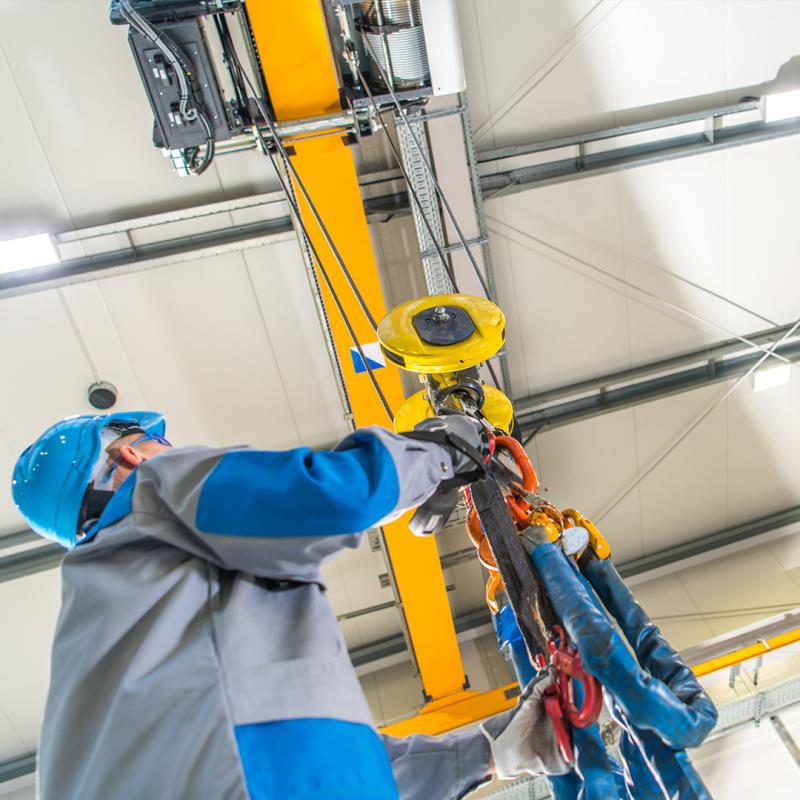
Among the various lifting systems available, jib cranes are rapidly becoming the preferred choice for many companies, thanks to their versatile design, compact footprint, and advanced automation capabilities. Modern, smart jib cranes offer substantial operational advantages, transforming conventional lifting operations into streamlined, efficient processes.
To maximize these benefits, it’s important to understand precisely how smart jib cranes can enhance your workplace operations. This article explores key operational advantages, highlights various jib crane configurations, and guides you on how to choose a smart Jib Crane to meet your specific industrial needs.
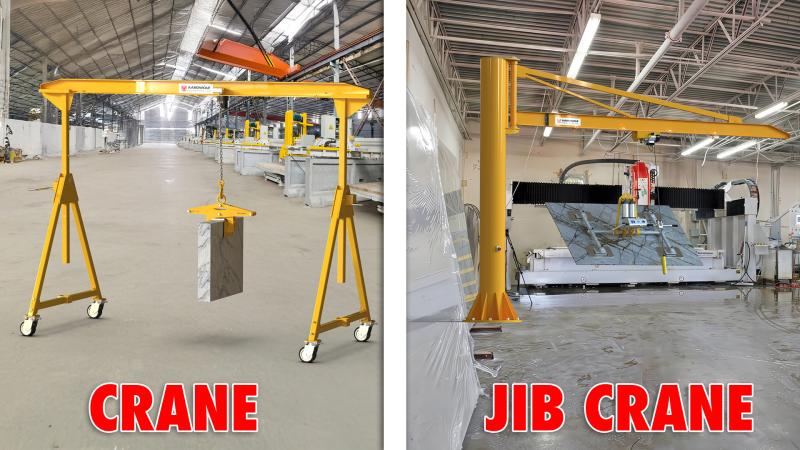
Traditional jib cranes were already essential for localized lifting tasks, providing a compact solution ideal for smaller workspaces or tasks requiring high precision. However, the evolution of smart technologies has significantly amplified their value, enabling these cranes to offer:
Enhanced productivity through automation and precision control.
Real-time data monitoring and predictive maintenance.
Improved operational safety.
Integration with other automated systems and workflows.
Smart jib cranes are equipped with innovative technologies that boost performance, minimize downtime, and enhance safety. Key smart features include:
Advanced sensors continuously monitor crane loads, detecting potential overload scenarios and automatically halting operations before unsafe conditions arise. This significantly reduces the risk of equipment damage or workplace accidents.
Automated positioning systems allow jib cranes to consistently handle repetitive tasks with unparalleled precision, greatly improving overall productivity. Integrated software solutions enable exact positioning, smooth lifting, and controlled movements, ideal for precision tasks such as assembly and delicate handling operations.
Explore more about automation capabilities in our detailed guide on Which Jib Cranes Work Best with Automation?
With integrated IoT sensors and advanced analytics, smart jib cranes predict maintenance requirements, scheduling interventions proactively. This ensures your operations remain uninterrupted and maximizes crane lifespan.
Different jib crane configurations offer specific advantages suited for diverse environments and operational demands. Choosing the right type enhances overall productivity and optimizes space usage.
A freestanding jib crane offers complete 360-degree rotation, providing unmatched flexibility for positioning heavy loads within a designated work area. Its robust construction and broad range of lifting capacities make it ideal for heavy industrial applications.
Operational benefits: High maneuverability, independent positioning, versatile applications.
A wall-mounted jib crane is fixed directly onto existing structural supports, saving valuable floor space and optimizing operational efficiency in crowded areas.
Operational benefits: Space-saving design, precise movements, excellent load handling in tight spaces.
Find out more about the crane selection ensure safe and efficient operations for your facility.
Ceiling-mounted jib cranes eliminate floor interference completely, providing unobstructed workspace access. They are especially beneficial in cleanrooms, manufacturing labs, or production lines where floor space is highly valuable.
Operational benefits: Maximum workspace efficiency, minimal obstruction, high-level precision handling.
Articulating jib cranes feature jointed arms, allowing them to reach around obstructions or navigate complex production lines. This type is highly effective in spaces with obstacles or intricate workflow patterns.
Operational benefits: High flexibility, superior obstacle avoidance, precise positioning.
To find the optimal fit, explore our in-depth jib crane application.
Pillar jib cranes provide localized lifting solutions with minimal spatial requirements. Their robust design is perfect for repetitive lifting tasks requiring consistency and reliability.
Operational benefits: Compact footprint, robust construction, reliability for repetitive tasks.
Proper installation ensures that jib cranes perform optimally and safely. From evaluating your workspace to assembling and testing, a well-planned approach is essential.
Learn precisely how to install a jib crane, ensuring your installation aligns with operational best practices and safety guidelines.
Selecting appropriate mounting points.
Verifying structural integrity of supporting elements (walls, ceilings, pillars).
Ensuring alignment and balance during crane installation.
Conducting rigorous operational testing.
For a detailed walkthrough, review a Jib Crane step by step guide.
Understanding Key Differences between a crane an a jib crane ensures you select the best lifting solution. Compared to gantry or overhead cranes, jib cranes offer several distinct operational benefits:
Space Efficiency: Jib cranes require minimal floor space compared to extensive overhead crane systems.
Operational Flexibility: Greater localized precision and adaptability to automation technologies.
Cost Efficiency: Lower installation and operational costs due to simpler setup and maintenance.
Explore further insights into Jib Cranes vs Other Lifting Systems.
Selecting the right jib crane ensures operational effectiveness and workplace safety. Consider the following factors:
Load Requirements: Determine maximum weight and lifting frequency.
Workspace Constraints: Evaluate available space, obstacles, and required rotational capabilities.
Automation Needs: Assess the level of automation needed and compatibility with existing systems.
Review our recommendations on How to choose a smart Jib Crane that aligns precisely with your operational goals.
Incorporating smart jib cranes into your industrial setup significantly enhances operational efficiency, accuracy, safety, and productivity. By integrating cutting-edge automation and IoT technologies, modern jib cranes deliver unmatched operational benefits, especially when selected and installed correctly.
Whether you require a freestanding, wall-mounted, ceiling-mounted, articulating, or pillar jib crane, choosing wisely ensures robust performance, reliability, and efficiency for your facility.
Ready to optimize your lifting operations? Start by exploring detailed guidelines on Which Jib Cranes Work Best with Automation?.
1. How to operate a Jib Cranes safely
3. Over brace jib crane wall mounted
5. Is a Jib Crane a Gantry Crane
6. Articulated Jib Crane Wall Mounted
8. Manual Counterbalance Crane
10. Over Braced Jib Crane Column Mounted
Aardwolf의 신제품, 특별 할인 및 기타 정보를 받으려면 가입하세요.
가입하면 Aardwolf로부터 뉴스, 특별 할인, 프로모션 및 기타 정보를 이메일로 받는 데 동의하게 됩니다. 언제든지 구독을 취소할 수 있습니다.