











 뉴스
How Do Smart Jib Cranes Compare to Overhead Cranes?
뉴스
How Do Smart Jib Cranes Compare to Overhead Cranes?
언어 변경



우리를 팔로우하세요


 Share
Share
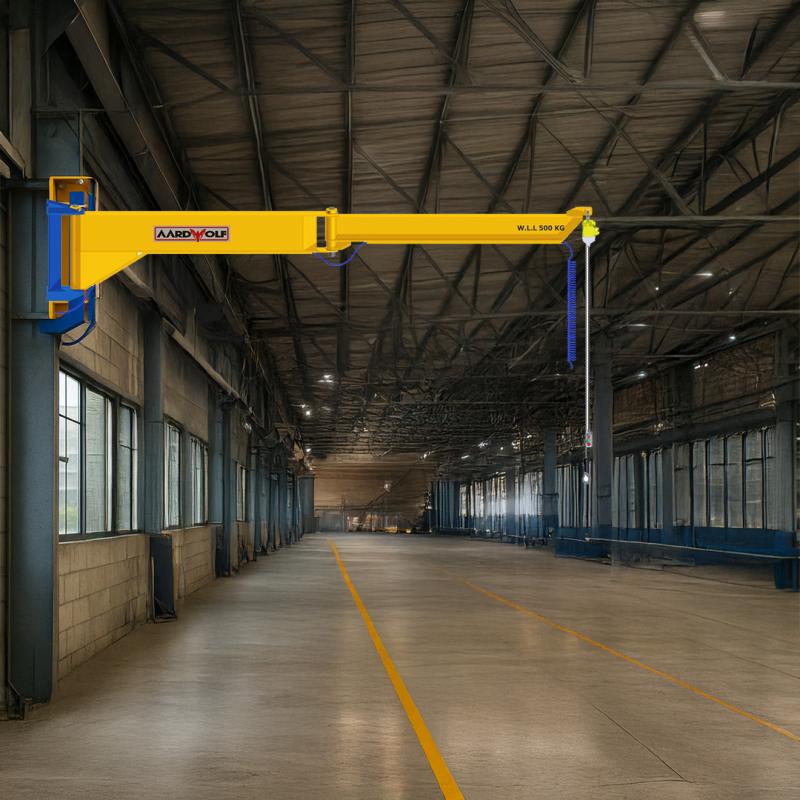
When considering industrial lifting solutions, businesses frequently evaluate two main options: jib cranes and overhead cranes. Both crane types offer unique capabilities, but the advent of smart technology and automation has significantly enhanced the appeal and functionality of jib cranes.
In this comprehensive guide, we'll explore how smart jib cranes compare to overhead cranes, examining their operational features, benefits, installation factors, and scenarios where each type excels. Moreover, you'll learn valuable insights on How to choose a smart Jib Crane for your facility.
Before comparing the smart features, let’s clearly understand the structural and functional distinctions between jib cranes and overhead cranes.
Jib cranes typically feature a horizontal boom (jib) that rotates around a fixed point. The main types include:
On the other hand, overhead cranes (also known as bridge cranes) span the entire workspace, typically mounted on rails along parallel runways, moving loads over large distances.
Explore more about the Key Differences between a crane and a jib crane to deepen your understanding.
Advances in automation and IoT (Internet of Things) have empowered jib cranes, enhancing their productivity, safety, and operational precision. Smart jib cranes offer a distinct edge over traditional overhead crane systems in various settings due to:
Smart jib cranes utilize automated positioning, sensors, and digital controls to handle repetitive lifting tasks with unmatched precision. Automation significantly reduces manual errors and boosts overall productivity, especially in assembly lines, packaging stations, or maintenance workshops.
In contrast, overhead cranes typically require more manual input and have limited precision in confined workspaces.
Review the Operational Benefits of Smart Jib Cranes to see practical examples of automation effectiveness.
Integrated IoT technology provides jib cranes with intelligent monitoring capabilities. Smart jib cranes offer real-time diagnostics, load monitoring, and predictive maintenance alerts. These smart capabilities minimize downtime, reduce operating costs, and ensure continuous productivity.
Overhead cranes, although robust, often require manual inspections and scheduled maintenance intervals, which can interrupt productivity.
Smart jib cranes excel in facilities with limited floor or ceiling space. Their compact design and versatile mounting options (freestanding, wall-mounted, ceiling-mounted, articulating, pillar) make them perfect for precise lifting in small to medium-sized spaces.
In contrast, overhead cranes require significant installation space, higher infrastructure investments, and permanent structural modifications.
Installing a jib crane—particularly smart wall-mounted or freestanding variants—is simpler and more cost-effective compared to overhead cranes. Smart jib cranes require fewer modifications to existing infrastructure, reducing both installation costs and setup time.
To understand the process thoroughly, review a Jib Crane step by step guide.
Smart jib cranes offer superior value in several operational contexts:
Workstations requiring precise, repetitive tasks (such as assembly lines or CNC machining cells) significantly benefit from smart jib crane systems. Their automated capabilities provide consistency and efficiency overhead cranes often struggle to match.
Explore detailed guidance for proper Jib crane application tailored to precise workstations.
Industries operating in constrained spaces—like automotive repair shops, laboratories, or warehouses—find smart jib cranes an ideal solution. Their compact size and advanced positioning control surpass overhead cranes in usability and effectiveness in tight spaces.
Smart jib cranes, with automated load control and precise positioning, significantly reduce risks associated with manual handling. This provides safer and more ergonomic working conditions compared to manual-intensive overhead cranes.
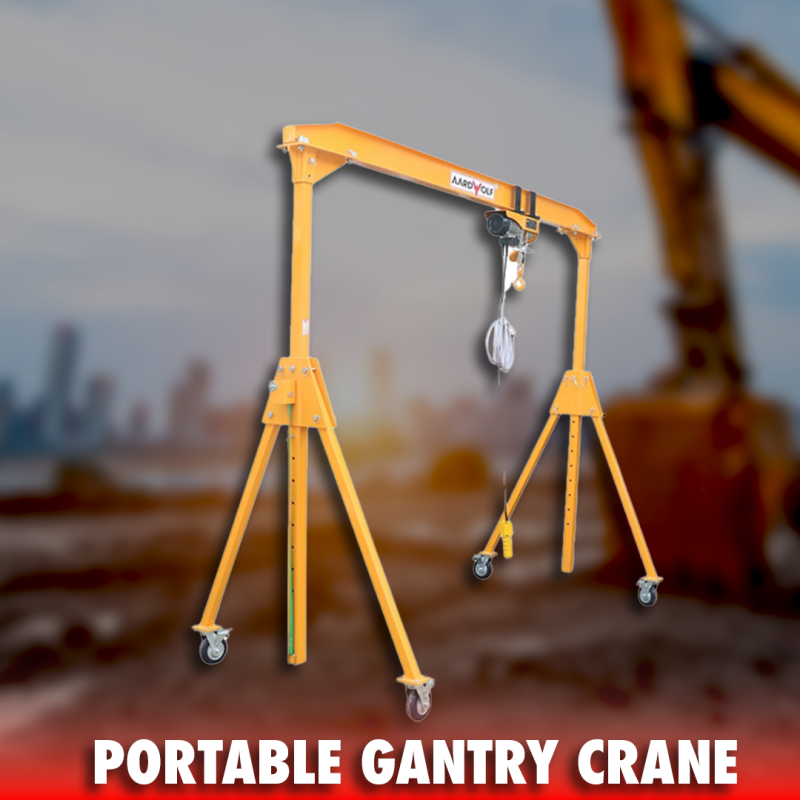
Selecting the right smart jib crane ensures maximum operational efficiency and workplace safety. Consider the following criteria when selecting a crane:
Make informed decisions by exploring our detailed article on How to install a jib crane, ensuring smooth implementation.
Moreover, proper crane selection ensure safe and efficient operations for your facility.
| Scenario | Best Crane Choice | Reason |
|---|---|---|
| Precision Assembly Line | Smart Jib Crane | Superior automation precision |
| High-Capacity Manufacturing Floor | Overhead Crane | High load capacity over large distances |
| Limited-Space Workshop | Smart Jib Crane | Compact and versatile |
| Cleanroom or Laboratory | Smart Ceiling-mounted Jib Crane | Zero-floor obstruction and precise positioning |
In conclusion, the integration of smart technologies in jib cranes significantly expands their application scope, efficiency, and precision, offering distinct operational advantages over traditional overhead cranes in many scenarios.
To make the right investment, carefully consider your facility's requirements regarding space, lifting precision, automation, and safety. Proper evaluation ensures you harness the full benefits of modern smart jib cranes for your operational success.
Ready to elevate your facility's lifting operations? Start by learning How to choose a smart Jib Crane tailored to your unique industrial needs.
References
1. How to operate a Jib Cranes safely
3. Over brace jib crane wall mounted
5. Is a Jib Crane a Gantry Crane
6. Articulated Jib Crane Wall Mounted
8. Manual Counterbalance Crane
10. Over Braced Jib Crane Column Mounted
Aardwolf의 신제품, 특별 할인 및 기타 정보를 받으려면 가입하세요.
가입하면 Aardwolf로부터 뉴스, 특별 할인, 프로모션 및 기타 정보를 이메일로 받는 데 동의하게 됩니다. 언제든지 구독을 취소할 수 있습니다.