













 뉴스
What Does a Gantry Crane Look Like?
뉴스
What Does a Gantry Crane Look Like?
언어 변경



우리를 팔로우하세요


 Share
Share
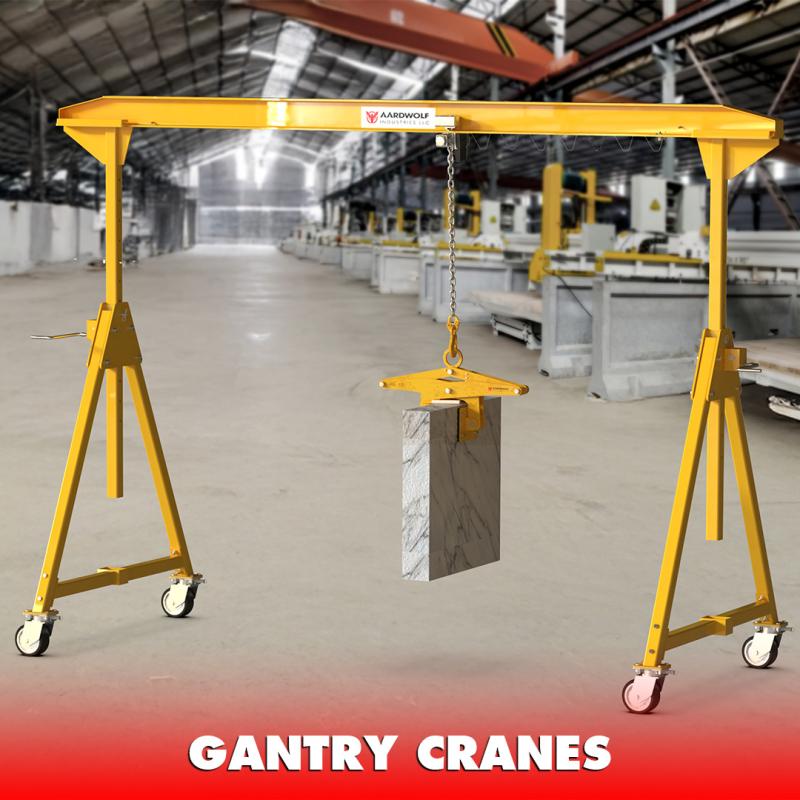
These are gantry cranes—versatile overhead lifting systems that are as practical as they are powerful. But what does a gantry crane look like? And how do different types compare in structure, function, and use?
In this comprehensive guide, we'll explore the visual and functional characteristics of gantry cranes, including full gantry, semi-gantry, portable, and adjustable types. We’ll also highlight the distinctive features of Aardwolf’s gantry crane lineup, providing visual context and practical design considerations for buyers, engineers, and operators.
A gantry crane looks like a large steel or aluminum frame shaped like a doorway or portal. It consists of a horizontal beam (the bridge or girder) supported by vertical legs on either side. These legs may ride on wheels, tracks, or embedded rails, depending on the crane's size and purpose. The bridge supports a trolley and hoist system, which travels across the span to lift and move heavy objects.
Unlike bridge cranes, gantry cranes do not need to be permanently attached to a building's structure, giving them a freestanding appearance and a modular, often mobile design.
Before we dive into the types of gantry cranes and their differences, it’s helpful to understand the basic structural components you’ll recognize in all gantry crane models:
Main Beam (Bridge): The horizontal beam that spans the distance between the legs.
Legs (Supports): Vertical columns supporting the main beam. These may be fixed or telescopic.
Base or End Trucks: Components at the bottom of the legs, often equipped with wheels or track rollers.
Hoist and Trolley: The lifting mechanism mounted on the beam. Moves side-to-side to position loads precisely.
Bracing or Diagonal Supports: Reinforces stability and load distribution.
A gantry crane’s design might vary in size and complexity, but these structural elements remain constant.
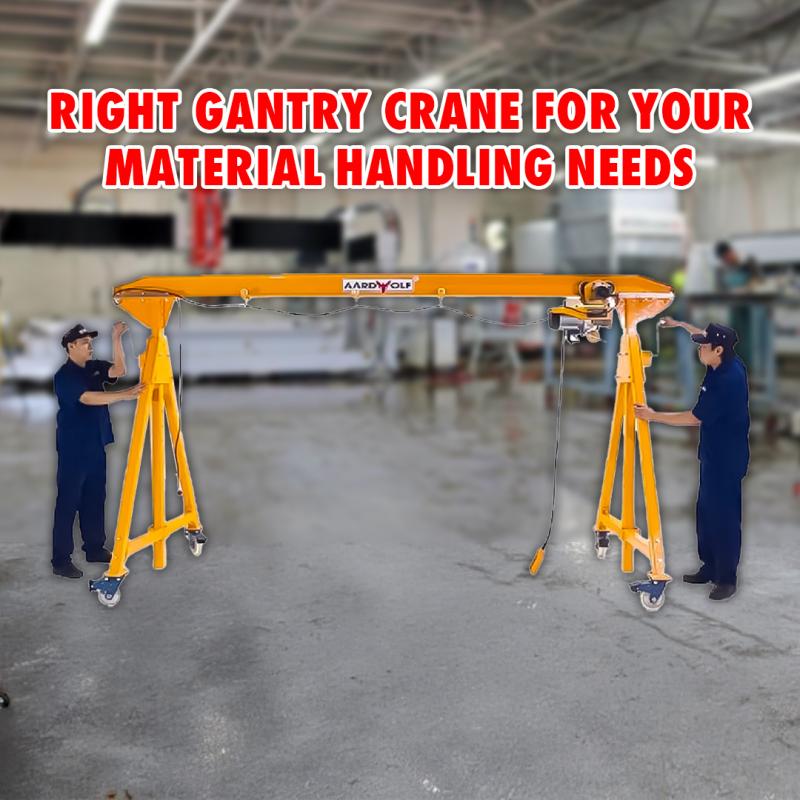
What does a full gantry crane look like?
Full gantry cranes are large, two-legged structures where both legs run on embedded rails or tracks in the floor. These cranes often span wide work areas like shipping yards or steel plants.
Visual Characteristics:
Heavy-duty steel frame
Dual vertical legs connected by a long bridge
Wheels at the base for motorized travel
Large hoist and trolley system suspended from the beam
May have cab for operator or remote control panels
What does a semi-gantry crane look like?
Semi-gantry cranes feature one leg that runs on the ground and another side that attaches to a wall-mounted runway system.
Visual Characteristics:
Asymmetrical design: one freestanding leg, one side wall-mounted
Ideal for narrow spaces or where floor space is limited
Tracks on one side only
What does a portable gantry crane look like?
Portable gantry cranes are smaller, mobile versions built for lighter loads. They often use casters or rubber wheels for easy movement and are typically made of aluminum or lightweight steel.
Visual Characteristics:
Compact “goalpost” frame
Four lockable caster wheels
No fixed track or foundation required
Manual or electric chain hoist
Easily collapsible for transport or storage
What does an adjustable gantry crane look like?
Adjustable gantry cranes feature telescoping legs or adjustable beam widths. This flexibility allows users to adapt crane dimensions to various workspaces or doors.
Visual Characteristics:
Height adjustment pins or crank mechanisms
Locking braces for stability
Often resemble standard portable cranes but with enhanced configurability
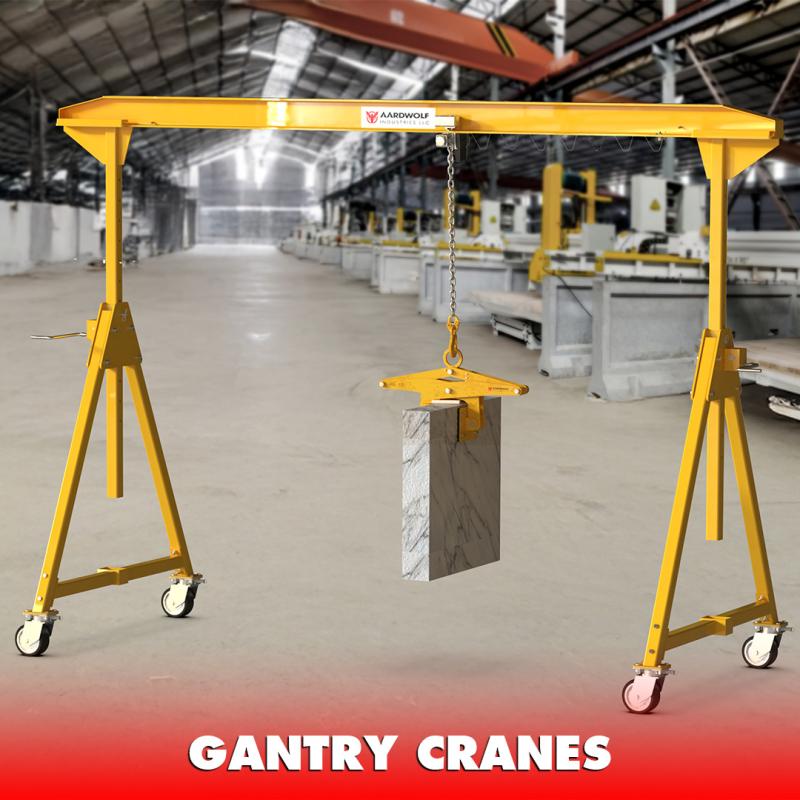
Aardwolf Industries offers some of the most versatile, ergonomic, and lightweight gantry crane systems in the material handling market. Their designs stand out visually due to:
Brushed aluminum finish (resistant to corrosion)
Precision-welded joints
Adjustable and collapsible features
Robust base wheels with lockable mechanisms
Color-coded adjustment points for intuitive use
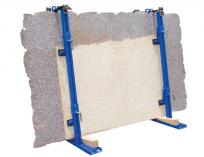
Custom Aardwolf gantries: Tailored solutions available upon request, often used in stone, glass, and metal handling industries
These cranes are not just visually distinctive—they’re engineered for performance and built with mobility, setup speed, and operator safety in mind.
The way a gantry crane looks will depend on several key design factors:
Outdoor cranes may feature galvanized or painted steel, UV protection, and weatherproof motor housings.
Indoor cranes prioritize compact form and maneuverability.
Large systems may use cable reels or busbars for electrification.
Portable cranes like Aardwolf models use standard power cords or battery-powered hoists.
Cranes designed for busy facilities often feature low-clearance profiles to allow forklifts or trucks to pass underneath.
Aardwolf cranes are popular in such settings because of their compact height and clear floor design.
Heavier-duty gantries have thicker beams, reinforced legs, and bracing.
Light-duty systems prioritize lightweight materials and maneuverability.
People often confuse gantry cranes with bridge cranes, but they look very different.
Aardwolf cranes—especially the portable types—are easily distinguished by their minimalist design, modular legs, and sleek aluminum finish.
Gantry cranes are ideal for:
Stone yards and slab handling (e.g., granite, marble)
Steel fabrication and welding shops
Shipyards and container terminals
Precast concrete operations
Maintenance departments in manufacturing plants
Aardwolf’s gantry cranes are especially popular in the stone fabrication and glass industries, where precision handling and portability are vital.
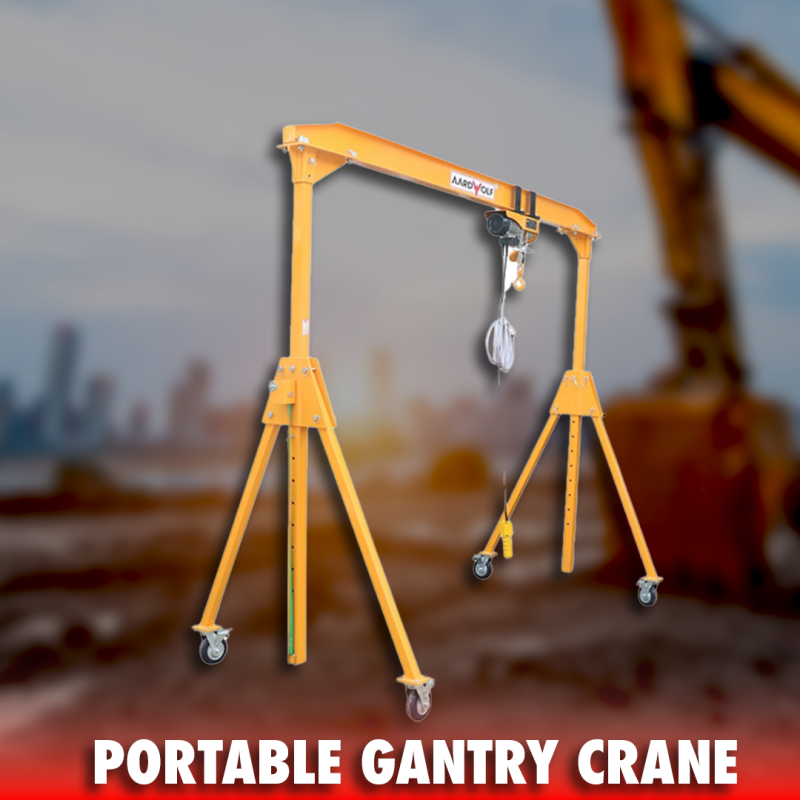
So, what does a gantry crane look like?
Depending on the type and function, a gantry crane can be a massive, rail-mounted structure capable of lifting shipping containers—or a lightweight, mobile system like Aardwolf’s AGC series, designed for workshops, warehouses, and job sites.
Visually, all gantry cranes share a common structural DNA: a horizontal beam supported by upright legs. But the materials, size, adjustability, and mobility set them apart.
If you’re seeking a gantry crane that is:
Easy to transport
Simple to assemble
Adjustable in height and span
Designed for both indoor and outdoor use
Backed by proven industry expertise
Then Aardwolf’s gantry crane systems are an excellent choice.
References
1. How to operate a Jib Crane safely
3. Over brace jib crane wall mounted
5. Is a Jib Crane a Gantry Crane
6. Articulated Jib Crane Wall Mounted
8. Manual Counterbalance Crane
10. Over Braced Jib Crane Column Mounted
Aardwolf의 신제품, 특별 할인 및 기타 정보를 받으려면 가입하세요.
가입하면 Aardwolf로부터 뉴스, 특별 할인, 프로모션 및 기타 정보를 이메일로 받는 데 동의하게 됩니다. 언제든지 구독을 취소할 수 있습니다.