












 뉴스
Jib Cranes: Installation, Models, and Applications for Every Industrial Need
뉴스
Jib Cranes: Installation, Models, and Applications for Every Industrial Need
언어 변경



우리를 팔로우하세요


 Share
Share
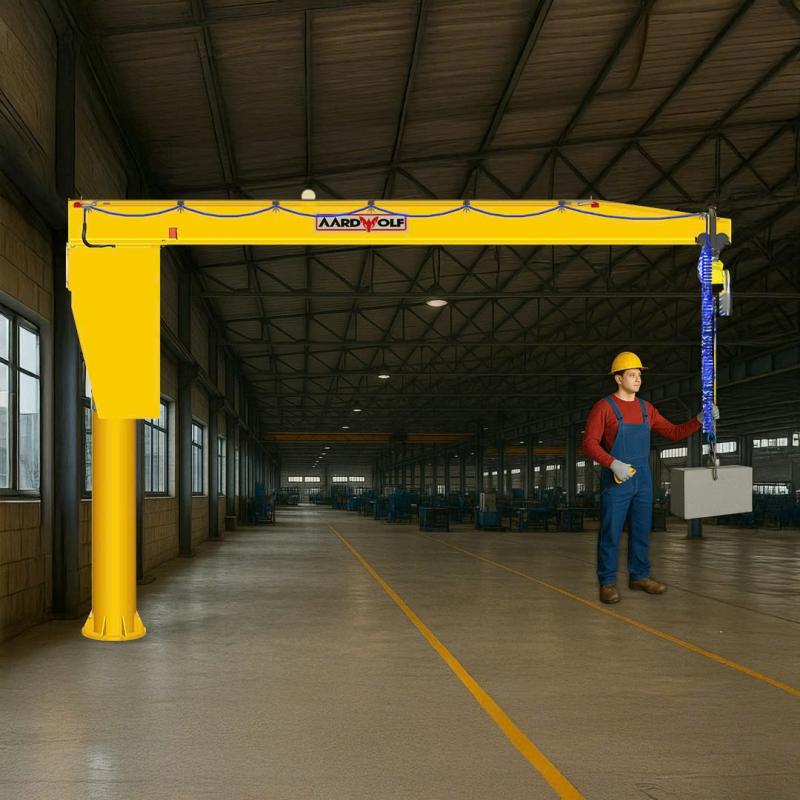
From freestanding jib cranes used in open floor environments to articulating jib cranes that navigate around obstructions, these lifting solutions offer unmatched versatility.
In this guide, we’ll explore the different models, functions, and key safety standards related to jib cranes, with semantic SEO structuring for maximum relevance and discoverability.
To browse all available crane types, explore Types of Jib Cranes.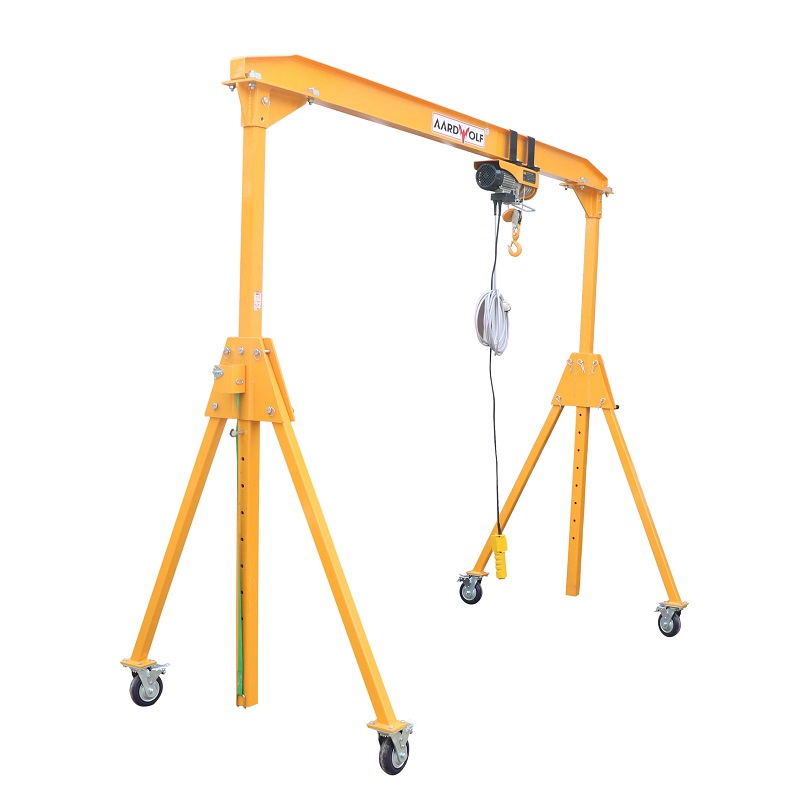
Jib cranes are a class of lifting equipment designed to assist in repetitive, localized load handling. They consist of a horizontal boom (jib arm) that supports a hoist, which can move along the jib and lift loads vertically and horizontally.
Jib cranes are known for their:
Explore a comprehensive range of Jib Cranes models to understand how they differ by application and mounting type.
Each configuration is designed to solve specific workspace challenges and lifting needs.
These cranes are installed directly into the floor with a concrete foundation and allow full 360° rotation. Ideal for:
They’re reliable, self-supporting, and do not depend on building structures for support.
How to apply wall-mounted jib cranes effectively:
Wall-mounted options maximize floor space and are ideal for workshops with strong vertical surfaces.
Ceiling-mounted models are ideal where floor space is limited. These cranes:
Explore articulated jib cranes products for enhanced flexibility:
Installed on existing structural columns, these cranes:
Understanding how jib cranes compare to overhead or gantry cranes is crucial. Learn about the Difference between crane and jib cranes solutions:
| Feature | Jib Cranes | Overhead Cranes | Gantry Cranes |
|---|---|---|---|
| Installation | Wall, floor, or ceiling | Ceiling-only | Floor-mounted, track-based |
| Space usage | Compact, localized | Full building span | Flexible, movable |
| Common use | Work cells, stations | Large facility transport | Temporary outdoor lifting |
| Cost-efficiency | High | Moderate | Moderate |
Correct installation is key to safe operation and durability. Here’s a simplified breakdown:
Read the full guide to install a jib crane for complete technical details.
Maintaining jib cranes is just as critical as installing them.
| Task | Frequency |
|---|---|
| Inspect anchors and bolts | Monthly |
| Lubricate pivot points | Monthly |
| Test hoist brake functionality | Weekly |
| Inspect electrical systems | Quarterly |
| Conduct full load test | Annually |
From shipping and logistics to metal fabrication, jib cranes are present in:
Their adaptability and ease of use make them a go-to solution for both small workshops and high-output factories.
Jib Cranes are vital for safe, ergonomic, and productive lifting across industries. Choosing the right model—whether freestanding, wall-mounted, ceiling-mounted, articulating, or pillar-mounted—depends on your layout, load requirements, and workflow.
To get started, browse the Types of Jib Cranes that best match your needs, and consult the official installation A guide to install a jib crane for proper setup.
References
1. How to operate a Jib Cranes safely
3. Over brace jib crane wall mounted
5. Is a Jib Crane a Gantry Crane
6. Articulated Jib Crane Wall Mounted
8. Manual Counterbalance Crane
10. Over Braced Jib Crane Column Mounted
Aardwolf의 신제품, 특별 할인 및 기타 정보를 받으려면 가입하세요.
가입하면 Aardwolf로부터 뉴스, 특별 할인, 프로모션 및 기타 정보를 이메일로 받는 데 동의하게 됩니다. 언제든지 구독을 취소할 수 있습니다.