











 뉴스
Jib Crane Price Guide: What Affects the Cost?
뉴스
Jib Crane Price Guide: What Affects the Cost?
언어 변경



우리를 팔로우하세요


 Share
Share
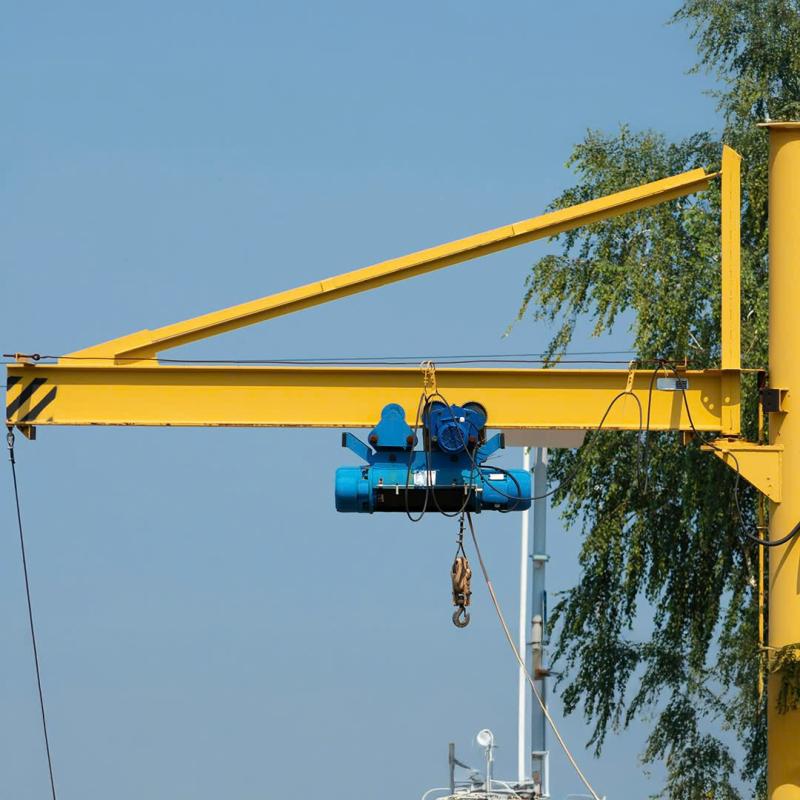
However, for businesses looking to invest in this versatile lifting solution, understanding what affects the cost of jib cranes is crucial to making the right financial and operational decision.
Whether you're exploring a freestanding jib crane, wall mounted jib crane, or articulating jib crane, several key factors can influence the final price. This comprehensive price guide breaks down everything you need to know, including crane types, specifications, customizations, and real-world examples from Aardwolf—a trusted name in professional lifting equipment.
To explore Aardwolf’s full catalog of lifting solutions, visit The resolution of Jib Cranes.
Choosing a jib crane is a long-term investment in operational efficiency, safety, and productivity. Yet, pricing varies significantly due to design differences, load capacities, installation methods, and brand reputation. Without proper guidance, companies may overspend or underinvest, affecting daily workflows.
Start by identifying your core requirements:
Load capacity
Rotation range
Mounting structure
Duty cycle
Custom needs (hoists, controls, finishes)
For help on usage and benefits, check How to use Jib Cranes efficiently.
Each type of jib crane serves different use cases, and the price reflects structural complexity and installation needs.
Freestanding Jib Cranes: Generally the most expensive due to base and foundation requirements. Suitable for high-capacity, wide-rotation tasks.
Wall Mounted Jib Cranes: Lower cost since they utilize existing structures. Ideal for workstations where space is limited.
Ceiling Mounted Jib Cranes: Prices vary based on ceiling infrastructure compatibility.
Articulating Jib Cranes: Slightly more costly due to dual-arm pivot mechanics for navigating obstacles.
Pillar Mounted Jib Cranes: Involves structural supports and medium installation costs.
For a detailed comparison of lifting systems, refer to What is the difference between crane and jib cranes.
Larger cranes capable of lifting heavier loads or spanning wider areas require more materials and engineering, increasing their price. For example:
125–250 kg: Budget-friendly, suited for light-duty use
500–1000 kg: Mid-tier for industrial assembly lines
1500–2000 kg and above: Custom-engineered for heavy lifting
Boom length and rotation (e.g., 3m–6m arm, 180°–360° rotation) also contribute to steel costs, counterweights, and structural reinforcement.
Installation can range from basic bolting (wall-mounted) to complex foundation anchoring (freestanding). Costs increase with:
Custom concrete bases
Reinforced wall/ceiling mounts
Load testing and certification
Electrical wiring for hoists
For step-by-step setup tips, explore An installation to jib cranes.
Common add-ons that affect pricing:
Electric or pneumatic hoists
Trolley systems
Rotation stops or limiters
Weatherproof coatings
Stainless steel options for clean rooms or corrosive environments
A simple manual jib crane may cost significantly less than a motorized system with automated safety stops and anti-corrosion treatments.
| Jib Crane Type | Load Range | Boom Length | Estimated Price Range |
|---|---|---|---|
| Wall Mounted (Basic) | 125–500 kg | Up to 4m | $3,000 – $6,000 |
| Wall Mounted (Advanced) | 500–1000 kg | 4–5m | $6,000 – $9,000 |
| Freestanding (Standard) | 500–2000 kg | 4–6m | $8,000 – $15,000 |
| Articulating Wall-Mounted | 125–500 kg | 3–4m | $5,000 – $10,000 |
| Custom & Heavy-Duty Units | >2000 kg | >6m | $15,000+ |
Prices include equipment only—installation, freight, and accessories will add 10–30% more.
Client: Sheet metal plant in Victoria
Product: Wall Mounted Jib Crane – 4m-250
Application: Positioning steel sheets onto laser beds
Total Cost: ~$5,500 AUD including hoist
Client: Brisbane-based logistics hub
Product: Custom 5m Freestanding Crane with 360° rotation
Application: Repetitive pallet loading
Total Cost: ~$12,000 AUD with foundation and testing
Client: Engine assembly plant in Melbourne
Product: Articulated Jib Crane Wall Mounted
Application: Installing 300 kg engines
Total Cost: ~$8,500 AUD with trolley system
Define your lifting need—don’t overpay for unnecessary capacity.
Work with your facility layout—choose wall-mounted when space is tight.
Account for installation—include structural assessments and contractor costs.
Request warranties—ensure coverage for parts and structure.
Plan for long-term use—invest in better finish, motorized hoists, and ergonomic features.
To explore versatile and scalable models, check Explore the jib cranes wall-mounted.
The upfront cost of jib cranes is only part of the equation. Long-term benefits such as reduced labor strain, fewer injuries, quicker task completion, and operational consistency often pay for the equipment within a year or two—especially in busy environments like distribution centers or manufacturing plants.
Aardwolf cranes are designed for real-world durability, ease of use, and scalable integration with your workflow. Whether it’s a basic manual unit or an advanced electric jib system, knowing what factors into cost ensures you choose a crane that meets both performance and budget needs.
Start with Optimizing wall-mounted jib cranes to see how strategic selection drives operational excellence.
1. How to operate a Jib Cranes safely
3. Over brace jib crane wall mounted
5. Is a Jib Crane a Gantry Crane
6. Articulated Jib Crane Wall Mounted
8. Manual Counterbalance Crane
10. Over Braced Jib Crane Column Mounted
Aardwolf의 신제품, 특별 할인 및 기타 정보를 받으려면 가입하세요.
가입하면 Aardwolf로부터 뉴스, 특별 할인, 프로모션 및 기타 정보를 이메일로 받는 데 동의하게 됩니다. 언제든지 구독을 취소할 수 있습니다.