











 뉴스
How Jib Cranes Work with Automation
뉴스
How Jib Cranes Work with Automation
언어 변경



우리를 팔로우하세요


 Share
Share
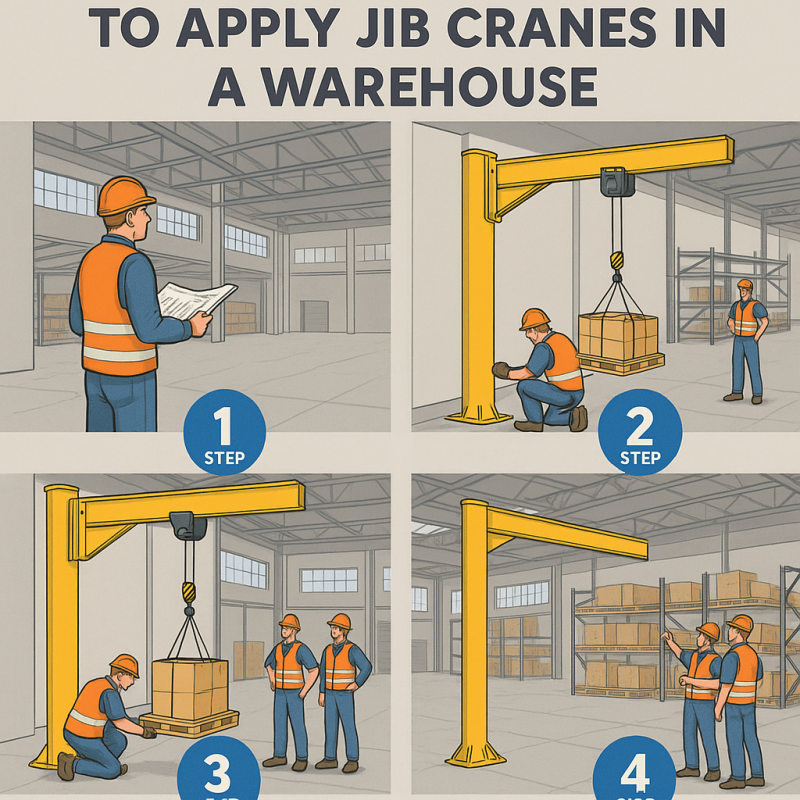
This article explains in detail how various types of jib cranes—including freestanding jib cranes, wall mounted jib cranes, ceiling mounted jib cranes, articulating jib cranes, and pillar jib cranes—integrate automation into their operations, providing crucial insights into their applications, benefits, and operational processes.
Among the most transformative developments is the automation of material handling equipment, particularly jib cranes. Traditionally known for their simplicity, versatility, and reliability, jib cranes now increasingly feature advanced automation technologies.
If you're new to jib cranes, start by exploring What is a jib crane?.
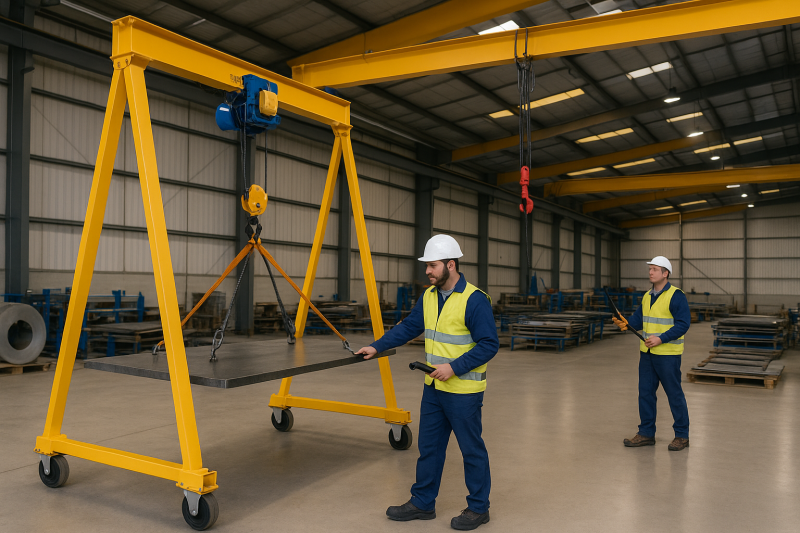
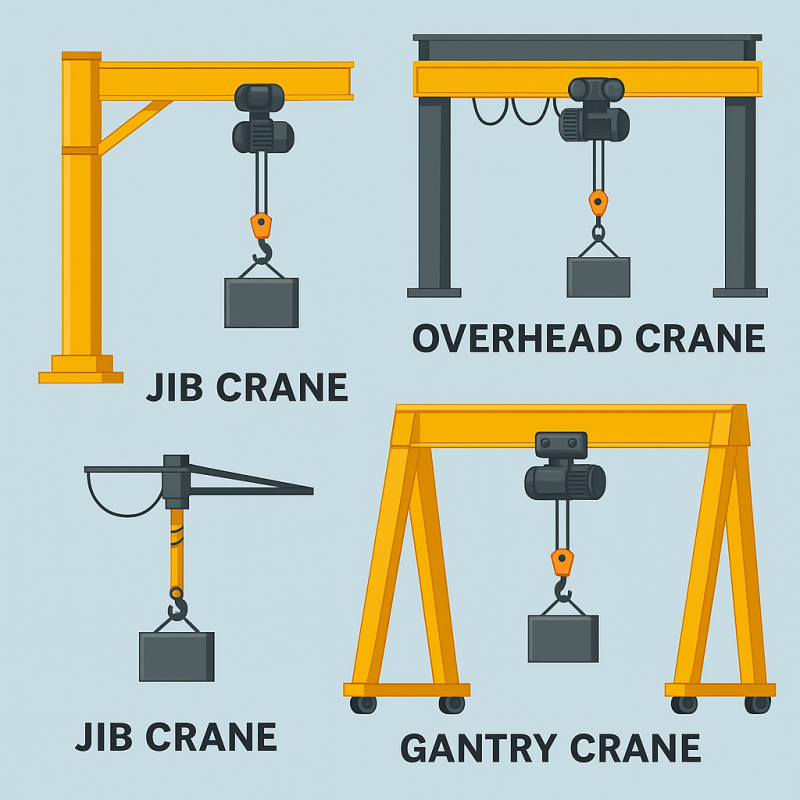
Before delving into automation, it is important to clearly understand jib cranes' foundational mechanics. A jib crane typically comprises a horizontal jib or boom, connected to a vertical support or mast. This design allows the hoist and trolley to move loads efficiently within a specific radius around the pivot point.
Jib Arm: Supports horizontal load movement.
Hoist: Moves loads vertically.
Trolley: Traverses along the jib arm to adjust load position.
Automated Controls and Sensors: Enhance precision, safety, and efficiency through electronic control systems.
Freestanding jib cranes are independent, robust structures offering a complete 360-degree rotation. Their strength and flexibility make them ideal candidates for automation. Automated freestanding jib cranes typically feature motorized rotation systems and automated trolleys that respond to precise, pre-programmed commands.
Ideal Uses: Warehouses, shipping docks, and heavy fabrication environments.
Automation Benefits:
Accurate load placement.
Reduced manual effort and fatigue.
Improved efficiency through automated cycle times.
Wall mounted jib cranes are fixed to structural supports, providing efficient lifting solutions in compact areas. Automated wall-mounted jib cranes include precise motorized trolleys, rotation limits sensors, and remote or semi-automated controls to enhance workflow precision.
Discover more specifics by exploring Explore Wall-mounted Jib Cranes?.
Ideal Uses: Assembly lines, machining cells, and confined spaces.
Automation Benefits:
Space optimization.
Precision handling in restricted areas.
Increased throughput due to consistent operations.
Ceiling-mounted jib cranes, ideal for saving floor space, are particularly effective when automated. Automation technology integrated into ceiling-mounted cranes ensures precise vertical and horizontal load movement with minimal manual oversight.
Ideal Uses: Cleanrooms, laboratories, electronic manufacturing plants.
Automation Benefits:
Enhanced cleanliness and safety.
Minimized floor obstructions.
Superior material handling precision.
Articulating jib cranes possess enhanced flexibility due to multiple pivot points. When automated, these cranes achieve unparalleled maneuverability and precision, effectively navigating around machinery and obstacles.
Learn more practical operational tips at How to operate a jib crane.
Ideal Uses: Automotive assembly, intricate manufacturing operations, and machine maintenance.
Automation Benefits:
Precise load positioning.
Improved operational safety.
Reduction of operator errors.
Pillar jib cranes feature compact, floor-mounted designs suitable for moderate loads and limited rotation. Automation enhances pillar cranes’ productivity by incorporating motorized slewing mechanisms and automated hoists.
Ideal Uses: Maintenance workshops, small production areas, machine servicing stations.
Automation Benefits:
Increased lifting consistency.
Reduced operator workload.
Improved safety through remote operation capabilities.
The future of material handling is increasingly automated. Automated jib cranes offer numerous enhancements, positioning themselves as essential components in smart manufacturing setups. By understanding automation trends, industries can better prepare for future demands. Learn more about the Industrial crane future.
IoT sensors for predictive maintenance and real-time monitoring.
Programmable logic controllers (PLCs) for precise and repeatable operations.
Remote monitoring and control technologies.
Automation transforms jib cranes from manual labor-intensive tools to sophisticated lifting systems. Below are some practical applications and advantages:
Automated jib cranes substantially decrease human intervention, significantly reducing workplace accidents. Sensors immediately alert operators of potential issues, ensuring safe operations.
Automation streamlines the lifting process, allowing operators to perform tasks more quickly and accurately, reducing downtime and enhancing workflow.
Automated jib cranes excel in precision tasks, ensuring materials are placed exactly where needed without manual errors, essential in industries like electronics, aerospace, and pharmaceuticals.
Explore further insights into Jib crane application.
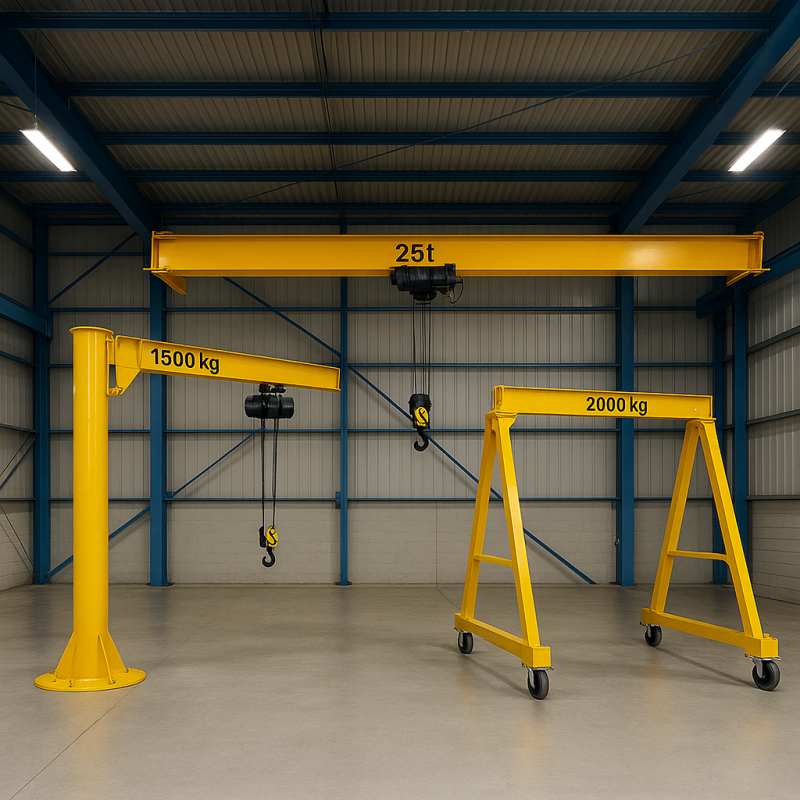
When considering automation, businesses often evaluate different crane types. Understanding how jib cranes compare to overhead cranes is critical. Overhead cranes excel in extensive operations with heavy, bulky loads, while jib cranes offer superior localized, precise lifting capabilities.
Explore this in-depth comparison at Jib vs overhead crane.
Implementing automation effectively requires careful planning:
Select the appropriate jib crane type based on your operational needs and space constraints.
Follow professional guidelines carefully, ensuring optimal placement and alignment of sensors and automation components.
Regular training and comprehensive maintenance schedules are critical to ensure smooth automated operations.
Guidelines for installation and setup can be found in Jib crane application.
The integration of automation technology with jib cranes represents a significant step forward for industrial efficiency, precision, and safety. By understanding and leveraging the distinct capabilities of various automated jib crane types—whether freestanding, wall-mounted, articulating, ceiling-mounted, or pillar-mounted—businesses can optimize their material handling operations and stay ahead of evolving industry standards.
Continue your journey into the automated lifting systems' future by exploring more about smart Jib Cranes and ensure your industrial processes remain competitive, efficient, and safe.
References
1. How to operate a Jib Cranes safely
3. Over brace jib crane wall mounted
5. Is a Jib Crane a Gantry Crane
6. Articulated Jib Crane Wall Mounted
8. Manual Counterbalance Crane
10. Over Braced Jib Crane Column Mounted
11. Powered counterbalance Crane
Aardwolf의 신제품, 특별 할인 및 기타 정보를 받으려면 가입하세요.
가입하면 Aardwolf로부터 뉴스, 특별 할인, 프로모션 및 기타 정보를 이메일로 받는 데 동의하게 됩니다. 언제든지 구독을 취소할 수 있습니다.