













 便り
What Is the Difference Between a Bridge Crane and Gantry Crane?
便り
What Is the Difference Between a Bridge Crane and Gantry Crane?
言語を変更する



フォローする


 Share
Share
These two systems are often confused due to their similar overhead lifting functions, but they are fundamentally different in design, cost, installation, and use case. Selecting the wrong crane can lead to wasted resources, inefficient workflows, or structural limitations in your facility.
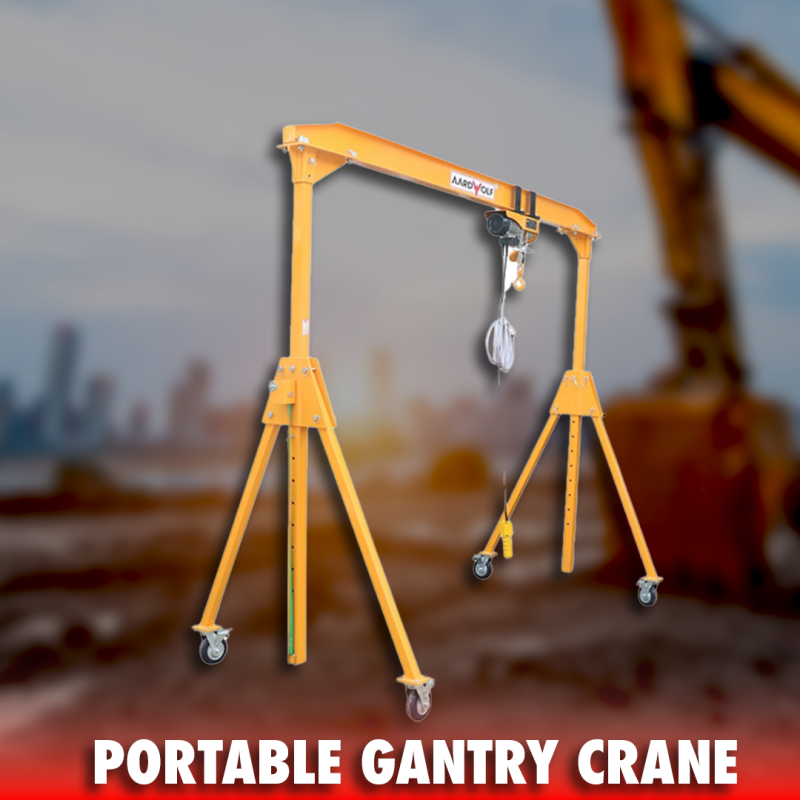
A bridge crane is typically a permanent, building-integrated solution ideal for large-scale industrial facilities with heavy-duty lifting requirements. In contrast, a gantry crane—like the portable models offered by Aardwolf—is a self-supporting, mobile system that delivers fast deployment, flexible positioning, and reliable lifting capacity without the need for runway beams or structural supports.
This guide will provide a detailed comparison of gantry cranes vs. bridge cranes, highlighting key technical differences, operational benefits, and best-use scenarios. We’ll also explore how Aardwolf’s AGC-1000 Gantry Crane stands out as a versatile, durable, and cost-effective lifting solution for professionals in stone fabrication, construction, maintenance, and general manufacturing.
By the end, you’ll have a clear understanding of which crane system aligns with your operational needs—and why Aardwolf’s gantry cranes are trusted by material-handling professionals around the world.
Overhead lifting systems have been used in industrial construction and manufacturing since ancient times. From the first cranes in ancient Greece to today’s hydraulic, electric, and computer-controlled systems, cranes have evolved to meet the growing needs of modern material handling.
Today, bridge cranes and gantry cranes are two of the most widely used overhead lifting solutions—but they are not the same. Choosing the wrong system can lead to inefficiency, safety risks, or unnecessary expenses. That’s why it’s important to clearly understand how each system works and where it excels.
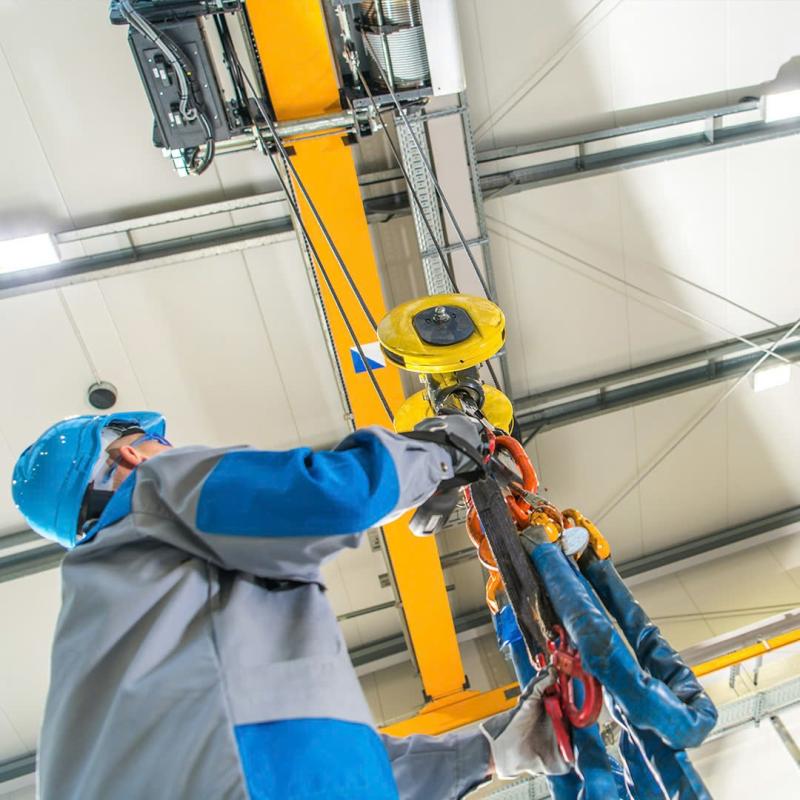
A bridge crane (also known as an overhead crane) is a permanent lifting solution installed inside buildings or production facilities. It consists of a horizontal bridge that spans across a set of parallel runways mounted on building columns or roof structures.
Runs on fixed elevated rails
Lifting mechanism (hoist/trolley) moves along the bridge
Bridge moves horizontally across the runway system
Typically built into the structure of the facility
Heavy-duty manufacturing
Warehousing and distribution centers
Steel production
Automotive assembly lines
Bridge cranes are known for their customization and capacity, with some systems handling loads of up to 100 tons.
A gantry crane is a self-supporting overhead crane that uses freestanding legs to support the horizontal bridge. These legs may be fixed, height-adjustable, or mobile on casters or rails, depending on the design.
No building structure required
Legs support the beam, often with wheels or tracks
Can be used indoors or outdoors
Available in portable, semi-gantry, or full-gantry configurations
Construction sites
Stone fabrication and metalworking
Maintenance bays
Outdoor storage yards
Gantry cranes are more versatile and mobile, and typically more affordable than bridge cranes, especially when used in environments that don’t require high-capacity lifting.
Let’s take a closer look at the fundamental differences between bridge and gantry cranes:
Despite their differences, bridge cranes and gantry cranes do share several common traits:
Use hoists or trolleys to raise and lower materials
Provide overhead lifting capabilities
Can be operated manually, electrically, or via remote control
Both can increase safety and reduce manual handling risks
Often used in material handling, assembly, and loading/unloading tasks
Understanding this overlap explains why many people confuse the two. However, the key difference lies in how the crane is supported and installed.
To determine whether a bridge or gantry crane is the better fit for your application, ask yourself the following:
Do you need a permanent installation or a mobile system?
Choose bridge crane for permanent, facility-wide coverage
Choose gantry crane for flexible, reconfigurable layouts
What’s your maximum load requirement?
Bridge cranes are better for extreme heavy-duty lifting
Gantry cranes, like Aardwolf's AGC-1000, are ideal for loads up to 1,000 kg
Is outdoor use a factor?
Bridge cranes are typically indoor-only
Gantry cranes work well in outdoor yards or mixed environments
Is your space already built out, or are you renting or moving often?
Gantry cranes are better for leased spaces or temporary projects
Aardwolf Industries offers one of the most user-friendly and effective gantry crane solutions available today — the AGC-1000 Portable Gantry Crane.
1,000 kg lifting capacity suitable for stone, glass, and metal
Quick assembly and disassembly, no tools required
All-aluminum construction, making it light but strong
Lockable swivel casters for safe movement across flat surfaces
Adjustable height, making it versatile for different working clearances
Corrosion-resistant finish, suitable for indoor and outdoor use
This makes the Aardwolf AGC-1000 an excellent alternative to more expensive bridge crane setups when mobility, speed of deployment, and moderate lifting capacity are the priorities.
Stone slab handling in fabrication shops
Equipment maintenance and repair
Temporary lifting solutions on construction sites
Moving glass panels or metal sheets safely and efficiently
Aardwolf gantry cranes comply with international safety and manufacturing standards, ensuring professional-grade performance without the structural overhead of traditional bridge crane systems.
Understanding what is the difference between a bridge crane and gantry crane is critical when planning material handling systems for your workspace. While both serve similar lifting functions, their designs, installation requirements, mobility, and costs vary significantly.
Bridge cranes are ideal for heavy-duty, permanent lifting operations in large, well-equipped industrial facilities.
Gantry cranes—especially portable options like the Aardwolf AGC-1000—offer unmatched flexibility, quick setup, and high performance for mobile, temporary, or light-to-medium duty applications.
By choosing the right crane type, you ensure optimal lifting efficiency, lower installation costs, and a safer work environment. And by trusting a proven manufacturer like Aardwolf, you can be confident in the quality, durability, and usability of your equipment.
References
1. How to operate a Jib Crane safely
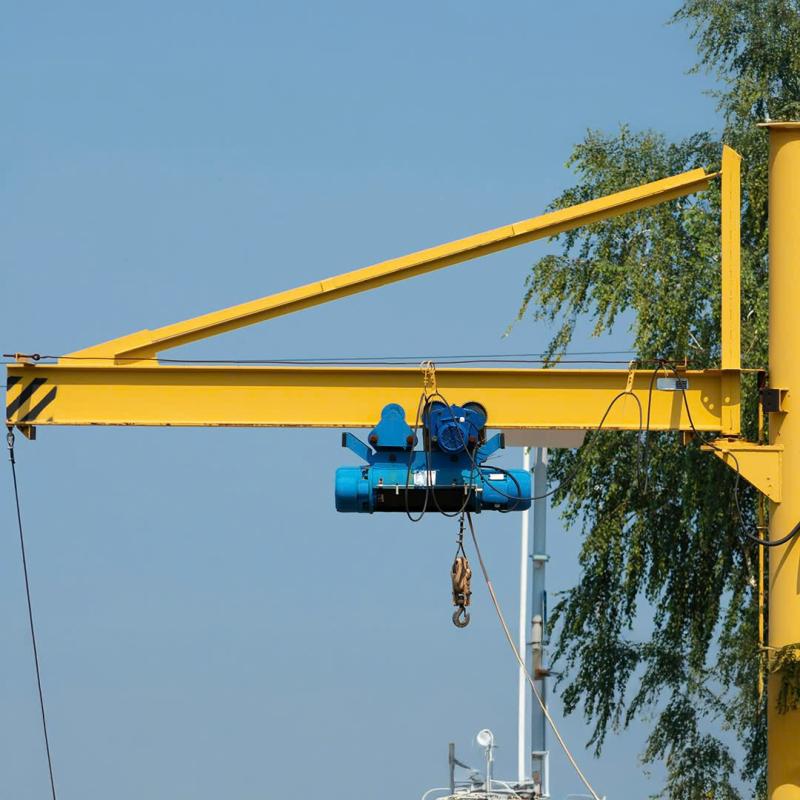
3. Over brace jib crane wall mounted
5. Is a Jib Crane a Gantry Crane
6. Articulated Jib Crane Wall Mounted
8. Manual Counterbalance Crane
10. Over Braced Jib Crane Column Mounted
Aardwolfの新製品、特別オファーなどの最新情報を受け取るにはご登録ください。
登録すると、Aardwolfからニュース、特別オファー、プロモーション、その他の情報を含むメールを受け取ることに同意したことになります。いつでも配信停止できます。