














 便り
Optimizing Material Handling Workflows with Automated Guided Vehicles
便り
Optimizing Material Handling Workflows with Automated Guided Vehicles
言語を変更する



フォローする


 Share
Share
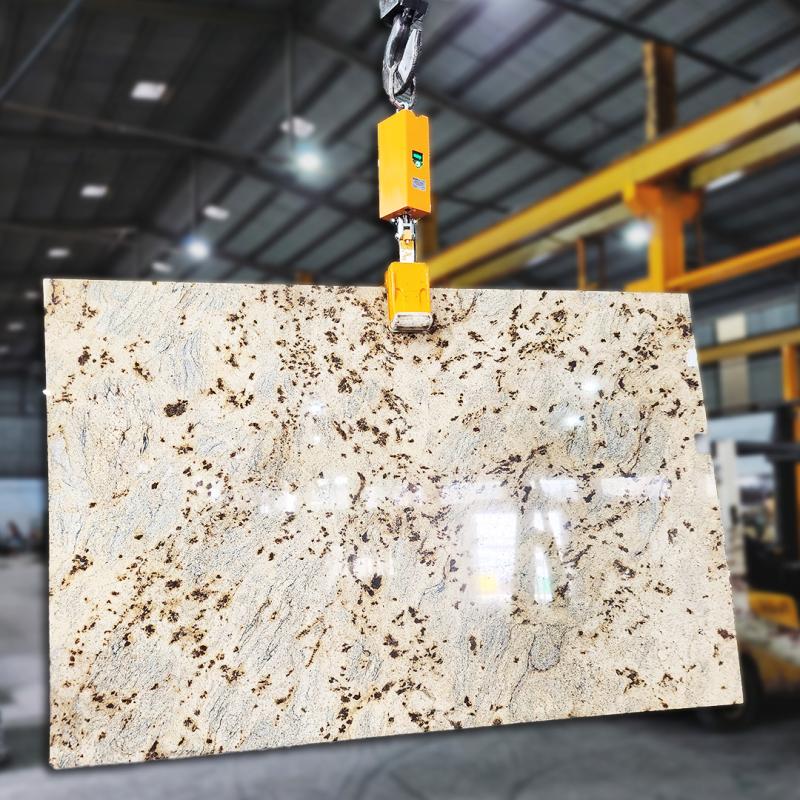
Automated Guided Vehicles (AGVs) are revolutionizing how material handling companies move goods, delivering consistent performance and up to 33% higher throughput in large-scale manufacturing environments. By integrating AGVs alongside complementary material handling equipment, operations can minimize manual labor, reduce errors, and unlock new levels of productivity. This in-depth guide explores best practices for AGV deployment, examines essential supporting tools—from gantry crane material handling to lifting clamp attachments—and highlights emerging trends that will shape the future of handling material processes.
Automated Guided Vehicles are driverless transport units programmed to follow predefined routes—using lasers, magnetic tapes, or optical sensors—to move pallets, containers, and carts within warehouses and production floors. Unlike forklifts or manual tugs, AGVs offer:
Predictable cycle times that eliminate variability due to operator fatigue.
Enhanced safety, leveraging onboard obstacle detection to prevent collisions.
Scalability, allowing fleets to expand easily as volume grows.
Seamless data capture, feeding telecoms into analytics platforms for continuous improvement.
By serving as the backbone of an automated workflow, AGVs enable factories to achieve a lean, scalable, and resilient material flow.
While AGVs follow fixed guides, related technologies cater to distinct needs:
Autonomous Mobile Robots (AMRs) leverage on-board vision and AI to navigate dynamic environments—ideal for mixed-SKU order picking.
Automated Guided Carts (AGCs) are heavy-duty AGVs that transport oversized loads (such as automotive frames) along simple taped paths at low cost.
Choosing the right system depends on payload size, route complexity, and integration requirements within your material handling equipment suite.
AGVs maintain continuous operation, reducing downtime between shifts and eliminating bottlenecks. According to the “Boosting productivity with AGVS in Modern Manufacturing” study, top original equipment manufacturers (OEMs) report production increases of up to 33% when automating repetitive transport tasks. By automating material transfers, AGVs free skilled workers to focus on assembly, quality control, and other value-added activities.
Manual movement of heavy loads often leads to injuries and downtime. AGVs shoulder the burden of transporting bulky items—such as those handled by vacuum lifter slab lifter systems—minimizing operator strain and lowering incident rates. Built-in collision sensors halt AGVs on detecting obstacles, safeguarding personnel and costly assets.
AGV fleets generate telematics data—travel time, idle periods, battery health—that feeds into warehouse management systems (WMS) and manufacturing execution systems (MES). These insights allow managers to optimize routes, balance workloads, and predict maintenance needs, ensuring peak performance of both AGVs and complementary lifting equipment.
Successful AGV deployment hinges on thorough planning, from facility layout to equipment selection.
Map material flows to identify high-frequency routes and pinch points.
Measure aisle widths and turning radii to choose AGVs that fit your footprint.
Coordinate with process engineers to align AGV paths with existing conveyors and workstations.
Early collaboration between operations, IT, and safety teams prevents costly rework and accelerates time to value.
AGVs shine when paired with the right tools tailored to your specific workflows:
Implement Portable Gantry Crane methods at AGV pick-up and drop-off zones to handle loads beyond the AGV’s vertical reach.
Custom gantry modules enhance gantry crane material handling capabilities for multi-axis transfers in assembly cells.
Install Jib crane supports near AGV stations for quick, small-footprint lifts that AGVs cannot perform alone.
Use scissor lifter platforms to adjust load heights seamlessly, ensuring AGVs can dock precisely without manual intervention.
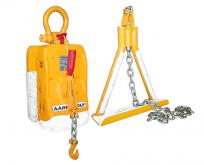
Equip AGV decks with How to apply a Lifting Clamp attachments for secure handling of irregular items like metal coils or stone slabs.
Add the right suction cups to vacuum-assisted stations for safe transport of glass and panel goods.
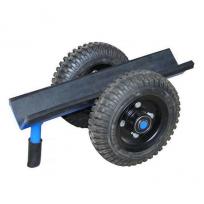
Adhere to Material Handling Trolley Standards when specifying carts that interface with AGVs, ensuring wheel and brake configurations meet safety codes.
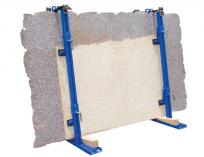
Integrate custom transport frames for specialized items—learn best practices in the part of a stone fabrication and Kerb Stones Products.
To ensure compliance and reliability, design all solutions around established benchmarks:
Reference the material handling revolution for contemporary system design principles.
Consult Material-handling Equipments to verify equipment categorization and performance metrics.
Factor in requirements for vacuum lifter slab lifter stations in facilities handling stone and glass, as detailed in how to use a stone fabrication and installation.
Pilot Phase: Deploy a small AGV fleet on low-risk routes to validate navigation and integration with existing WMS.
Scale-Up: Incrementally add units to production lines, adjusting path definitions and software parameters based on pilot findings.
Full Integration: Connect AGVs to ERP/MES for centralized job assignment, status tracking, and dynamic rerouting.
Use open-architecture APIs to link AGV control systems with your WMS and ERP platforms, enabling real-time load assignments.
Implement fleet management tools that optimize vehicle dispatch, battery charging cycles, and maintenance scheduling.
Train operators and maintenance teams on AGV safety protocols, emergency stop procedures, and routine inspections.
Leverage telematics data to shift from reactive to predictive maintenance, minimizing unplanned downtime.
Conduct regular Kaizen workshops to refine workflows—adjusting AGV routes, adding ratchet tie down traps, or rebalancing fleet sizes for peak demand.
Facilities that process stone and countertop products face unique challenges. AGVs can interface with specialized workstations:
For precision stone cut-to-size flows, integrate AGVs at stations designed for Selecting a Granite Countertop Installation.
Ensure smooth transitions between AGVs and stone polishing cells—refer to Prepare a Countertop Fabricator.
Automate post-installation maintenance deliveries using AGVs equipped to carry tools and supplies guided by Granite Countertop Maintenance Methods.
By orchestrating these hand-offs seamlessly, you minimize manual handling and uphold the highest quality standards in stone fabrication and installation.
As AGVs mature, their role in fully autonomous operations will expand:
Collaborative Cobots: Cobots working alongside AGVs will handle pick-and-place tasks, enhancing precision in mixed workflows.
Edge AI Navigation: Onboard machine-learning algorithms will enable AGVs to dynamically reroute around temporary obstacles, improving uptime.
Digital Twin Simulations: Virtual replicas of your facility will allow scenario testing—validating new AGV routes, equipment additions, and capacity expansions before shop-floor rollout.
These innovations promise to propel material handling equipment into an era of true autonomy and self-optimizing processes.
Integrating Automated Guided Vehicles into your facility is more than a single technology upgrade—it’s a strategic transformation of your entire material handling ecosystem. By combining AGVs with complementary solutions—lifting clamp attachments, scissor lifter decks, gantry crane material handling modules, and standardized trolleys—organizations can eliminate manual bottlenecks, enhance safety, and achieve unprecedented throughput. As the material handling industry continues to evolve, companies that adopt AGVs and embrace data-driven optimization will lead the charge toward smarter, more resilient manufacturing.
References
“Boosting productivity with AGVS in Modern Manufacturing,” ATS Industrial Automation: https://atsindustrialautomation.com/blog-posts/boosting-productivity-with-agvs-in-modern-manufacturing/
Aardwolfの新製品、特別オファーなどの最新情報を受け取るにはご登録ください。
登録すると、Aardwolfからニュース、特別オファー、プロモーション、その他の情報を含むメールを受け取ることに同意したことになります。いつでも配信停止できます。