














 便り
How Jib Cranes Improve Operational Efficiency
便り
How Jib Cranes Improve Operational Efficiency
言語を変更する



フォローする


 Share
Share
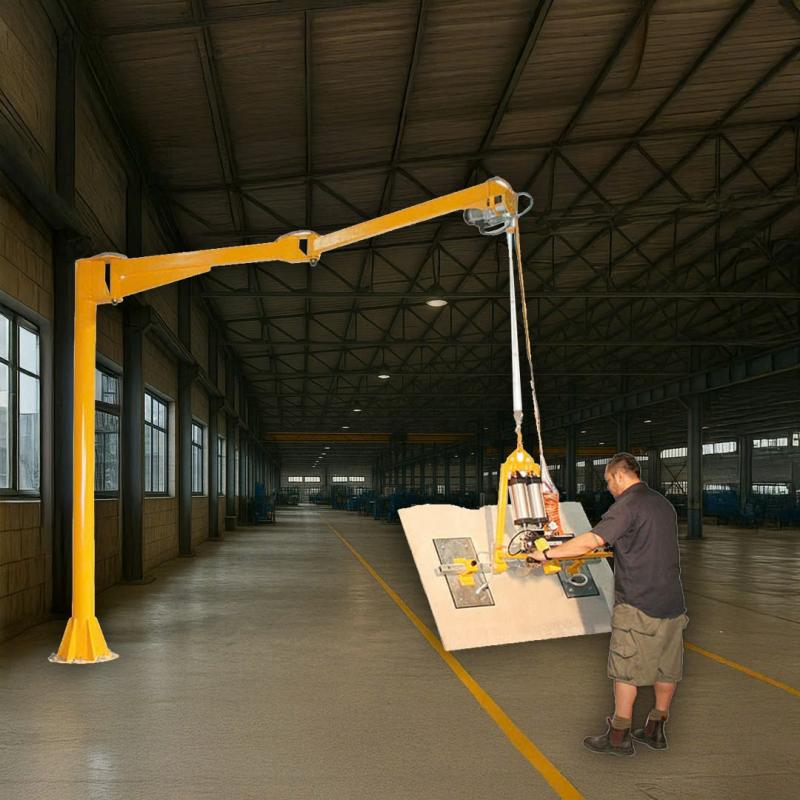
Companies continually seek smarter, faster, and safer methods to handle materials, reduce labor costs, and increase throughput. One of the most effective ways to achieve these goals is by integrating jib cranes into your workflow.
From freestanding jib cranes and wall mounted jib cranes to ceiling mounted, articulating, and pillar jib cranes, these lifting solutions have revolutionized material handling across diverse industries. This article explores how jib cranes improve operational efficiency and how to master their use in your facility.
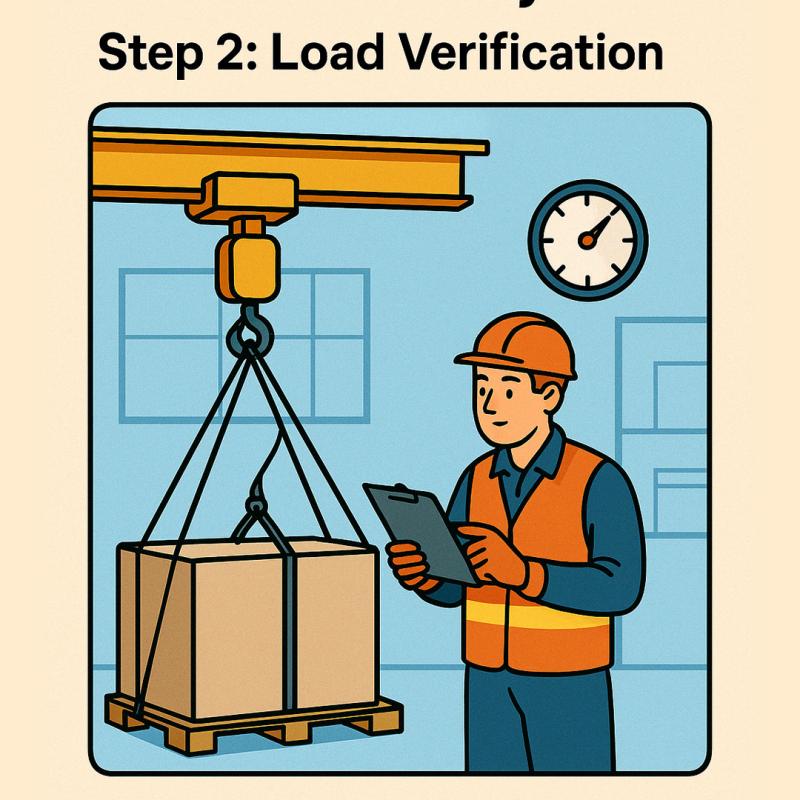
Jib cranes are compact lifting devices with a horizontal arm (the jib or boom) supporting a movable hoist. Unlike overhead bridge cranes, jib cranes cover localized work areas, offering flexible radial movement for precise material handling.
They are widely used in manufacturing, warehousing, assembly lines, and maintenance stations, where quick, repetitive lifting is necessary.
For a comprehensive overview, see The core of Jib Cranes.
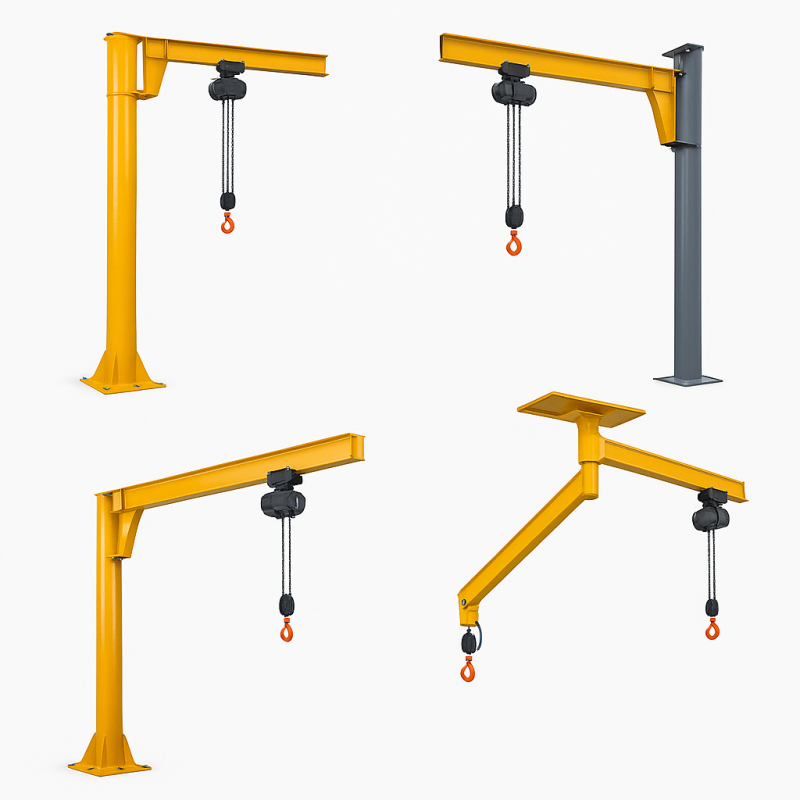
Understanding the main types of jib cranes helps businesses select the best fit for their operational needs.
Mounted on a reinforced concrete base, the freestanding jib crane offers 360° rotation and supports heavy loads.
Benefits: Covers large work areas independently; ideal for outdoor docks and big warehouses.
Efficiency impact: Enables fast, flexible material movement without reliance on building structure.
Fixed to walls or columns, wall mounted jib cranes provide up to 200° rotation with minimal footprint.
Benefits: Saves valuable floor space, perfect for compact production zones.
Efficiency impact: Streamlines workflow by integrating close to workstations.
Explore real installations like A Wall-mounted Jib Crane in your warehouse.
Suspended from overhead structures, these cranes free floor space and optimize material flow.
Benefits: Seamlessly integrates into lean manufacturing environments.
Efficiency impact: Enhances workspace ergonomics and flow without obstructing personnel.
Featuring dual pivoting arms, articulating jib cranes navigate around obstacles and into confined areas.
Benefits: Provides exceptional reach and precision.
Efficiency impact: Increases throughput by reducing load repositioning time.
Find tailored solutions in Jib Cranes Solution to your warehouse.
Installed via bolting to existing floors, pillar jib cranes serve light to medium lifting needs.
Benefits: Quick installation and modular design.
Efficiency impact: Ideal for small-to-medium workshop environments, boosting lift cycles.
Jib cranes enable quick vertical and horizontal load movement with minimal operator effort. This reduces the time taken to transfer materials between stations, increasing throughput.
By handling heavy or awkward loads, jib cranes reduce manual lifting injuries and forklift traffic, creating a safer environment.
Wall-mounted and ceiling-mounted models save floor space, allowing more room for personnel, equipment, and inventory.
Smooth operation and precise control decrease worker fatigue and increase accuracy, positively impacting productivity.
To unlock the full potential of your jib crane system, proper operation and maintenance are vital.
Regular inspections to ensure safety and performance.
Operator training to optimize crane use.
Efficient layout planning for minimal movement.
Integration with other material handling equipment.
For practical operational guidelines, visit Jib Crane Operations.
When choosing a jib crane, evaluate:
Load capacity: Match crane specs to maximum expected loads.
Rotation angle: Full 360° vs. limited swing.
Installation constraints: Floor, wall, or ceiling mounting.
Work area size and layout: To determine reach and coverage.
Frequency and duration of use: For durability and power needs.
Compare various types and their advantages in How to master Jib Cranes.
Automotive assembly lines reduced part transit time by 30% with articulating jib cranes.
Warehouses optimized loading dock operations by installing freestanding jib cranes.
Electronics manufacturers improved precision assembly with wall-mounted jib cranes.
For detailed case studies and installation examples, see Jib Cranes Methods.

Jib cranes are invaluable assets for operational efficiency across industries. Selecting the right type—whether freestanding, wall mounted, or articulating—coupled with effective operation and maintenance, delivers measurable improvements in speed, safety, and space utilization.
Explore your options and enhance your material handling strategy today by reviewing How many types of Jib Crane.
References
1. How to operate a Jib Cranes safely
3. Over brace jib crane wall mounted
5. Is a Jib Crane a Gantry Crane
6. Articulated Jib Crane Wall Mounted
8. Manual Counterbalance Crane
10. Over Braced Jib Crane Column Mounted
Aardwolfの新製品、特別オファーなどの最新情報を受け取るにはご登録ください。
登録すると、Aardwolfからニュース、特別オファー、プロモーション、その他の情報を含むメールを受け取ることに同意したことになります。いつでも配信停止できます。