















 便り
How to Install Gantry Crane
便り
How to Install Gantry Crane
言語を変更する



フォローする


 Share
Share
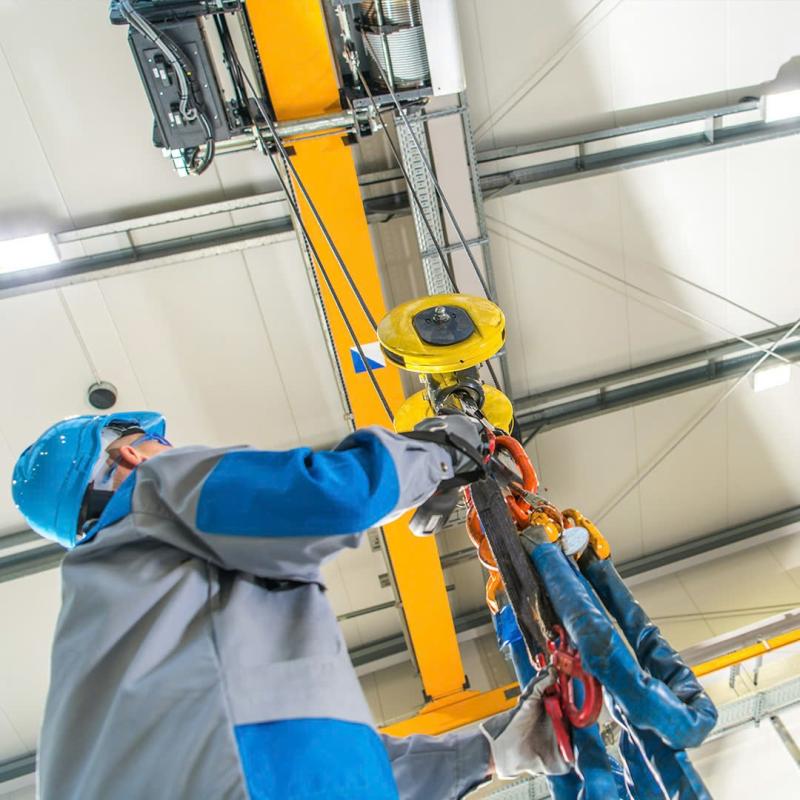
Their ability to lift and move heavy loads efficiently makes them indispensable in operations that require strength, precision, and safety. Understanding how to install gantry crane systems correctly is critical to ensuring their performance, longevity, and operational safety.
In this guide, we’ll walk you through the complete installation process of a gantry crane, using real-world applications and technical insights. We’ll also highlight Aardwolf’s portable gantry cranes, which are trusted across the globe for their ease of assembly, durability, and performance in both indoor and outdoor environments.
A gantry crane is a type of overhead crane built on a gantry—a structure used to straddle an object or workspace. Unlike fixed overhead cranes, gantry cranes are freestanding and can operate without permanent runway structures. They are ideal for lifting heavy items in open yards, assembly shops, and warehouses.
Common types include:
Single girder gantry cranes
Double girder gantry cranes
Portable gantry cranes (including those by Aardwolf)
Rail-mounted gantry cranes
Adjustable-height gantry cranes
The first stage in how to install gantry crane systems involves thorough planning. Proper preparation helps avoid costly mistakes and ensures compliance with safety standards.
Determine the crane type based on your working conditions:
Aardwolf Portable Gantry Crane 2,000 kg – ideal for smaller workshops and stone yards
Aardwolf Adjustable Gantry Crane 3,000 kg – offers flexibility in height and span for varied loads
Custom solutions for heavier or more complex load handling
Understand the:
Maximum load weight
Lifting height
Span required
Type of materials to be lifted (e.g., stone slabs, metal beams, containers)
Conduct a detailed assessment of:
Ground stability
Drainage and slope
Available working space
Obstruction-free paths for crane travel
Review local safety regulations and manufacturer instructions. Aardwolf cranes come with detailed safety manuals and operation guides.
Prepare a level surface that can withstand the crane’s load. For larger gantry cranes, concrete foundations with embedded anchor bolts may be required. Aardwolf portable gantry cranes can be used on standard warehouse floors or job sites with minimal surface preparation.
Mark the exact positions for:
End stops
Runway tracks (if applicable)
Base plates (for fixed models)
Use laser leveling tools to ensure precise alignment, which is crucial for crane stability and safety.
If your gantry crane uses a rail system:
Install steel base plates first.
Align the track sections using leveling tools.
Secure tracks with expansion bolts or welding, depending on surface type.
For portable cranes like the Aardwolf AGC-2000, no track installation is necessary. These models feature lockable polyurethane wheels, offering mobility without compromising safety.
Ensure parallelism between the tracks and test the smooth rolling of the crane. Misalignment may result in structural stress or derailment.
This is the most crucial stage in how to install gantry crane setups.
For larger cranes shipped in sections:
Position both ends on support stands.
Use flange plates and high-tension bolts for secure connection.
Aardwolf’s beams are pre-engineered for easy on-site assembly with minimal tools.
Mount the electric or manual hoist on the I-beam:
Use trolleys for lateral movement.
Check the compatibility of hoist lifting speed and capacity with the crane’s rated specifications.
Aardwolf recommends pairing with electric chain hoists for smooth operation in stone and metal handling.
Position each gantry leg upright using a crane or forklift.
Connect the legs to the main beam and lower base beam.
Check verticality and secure all bolts.
For Aardwolf adjustable models:
Extend the telescopic legs to the desired height.
Lock securely with provided pins and safety clips.
For motorized gantry cranes, electrical integration includes:
Install cable hangers and festoon systems.
Route motor wires through conduits on the gantry frame.
Protect exposed cables with armored sheathing.
Mount the control box (manual pendant or remote).
Connect emergency stop and limit switches.
Verify the operation of overload protection systems.
Aardwolf cranes feature user-friendly control panels and quick-disconnect power connections, allowing rapid deployment and testing.
A comprehensive load test ensures your gantry crane is safe for operation.
Define Test Load: Generally 125% of the crane’s rated capacity.
Lifting Test: Raise and lower the test weight while observing stability.
Travel Test: Move the load laterally along the beam.
Stress Evaluation: Check for deflections or abnormal movements.
Emergency Testing: Simulate emergency stops and power failure scenarios.
Record:
Load weights
Test durations
Observations
Passed/failure status
Aardwolf provides optional third-party certification services to help clients validate installation and safety compliance.
Each installation followed the same stages:
Pre-installation site analysis
Custom track layout
Main girder fabrication on-site
Electrical and safety verification
Certified load testing
The successful deployment of these systems ensured smooth operations in a desert industrial environment.
Aardwolf Industries is a global leader in lifting equipment for the stone, glass, and metal fabrication industries. Their gantry crane systems are known for:
Modular design for easy transport and quick setup
High-quality aluminum and steel frames
Adjustable height and span
Indoor and outdoor versatility
Compact storage after disassembly
Installing a gantry crane—whether a stationary heavy-duty model or a portable, adjustable system like those offered by Aardwolf—is a complex task that demands a systematic and highly controlled approach. Each step in the process, from initial planning to final load testing, plays a vital role in ensuring the crane operates at optimal efficiency while maintaining maximum safety for personnel and equipment.
Before any components are moved or assembled, a comprehensive plan must be developed. This includes:
Conducting a detailed site survey to evaluate surface conditions, access paths, and overhead clearance.
Selecting the right crane model based on load capacity, span, height requirements, and frequency of use.
Ensuring compliance with local and international safety regulations
Failure to prepare adequately at this stage can lead to misalignments, structural instability, and potential safety hazards down the line.
The installation process begins with preparing the ground or runway area—ensuring it's level, structurally sound, and properly marked for component placement. Track and base installation must be done with laser precision, especially for rail-mounted systems. Misalignments can lead to increased wear on wheels, motors, and bearings, or even derailment.
Assembling the crane’s core components—main beams, legs, hoists, and electrical systems—must follow the manufacturer’s instructions precisely. Brands like Aardwolf streamline this phase by offering modular designs with intuitive locking mechanisms, pre-engineered bolt alignments, and compact assembly guides.
Electrical integration requires special attention. Wiring must be protected against damage and weather (if installed outdoors), while safety systems such as limit switches, emergency stops, and overload protection devices must be fully functional and tested.
The load test is not just a regulatory requirement—it's the final and most revealing step in the installation. It verifies:
The load-handling integrity of the crane under full capacity
The stability of the structure under stress
The responsiveness and fail-safes of the control system
Each test must be documented, and any signs of mechanical strain, vibration, or unusual noise should be thoroughly investigated and corrected before the crane is commissioned for operational use.
When you choose a brand like Aardwolf, you're not just purchasing a piece of equipment—you're investing in a solution engineered for safety, efficiency, and longevity.
Quick deployment in construction, fabrication, and warehouse environments
Versatile applications, including lifting granite slabs, industrial components, and heavy containers
Tool-less height and span adjustment, reducing downtime during reconfiguration
Their cranes are manufactured using high-grade aluminum and steel, providing a superior strength-to-weight ratio, corrosion resistance, and ease of transport—all while maintaining compliance with CE and ANSI standards.
By following a methodical approach to how to install gantry crane systems, operators benefit from:
Reduced maintenance costs
Improved safety records
Higher operational uptime
Increased equipment lifespan
Moreover, a properly installed and tested crane system boosts workplace productivity by enabling faster, safer, and more precise material handling.
Whether you're overseeing the setup of a gantry crane in a heavy-duty industrial facility or a compact stone processing site, a well-executed installation is the first step toward long-term operational excellence. Trust the process. Trust the brand. Trust Aardwolf.
References
1. How to operate a Jib Crane safely
3. Over brace jib crane wall mounted
5. Is a Jib Crane a Gantry Crane
6. Articulated Jib Crane Wall Mounted
8. Manual Counterbalance Crane
10. Over Braced Jib Crane Column Mounted
Aardwolfの新製品、特別オファーなどの最新情報を受け取るにはご登録ください。
登録すると、Aardwolfからニュース、特別オファー、プロモーション、その他の情報を含むメールを受け取ることに同意したことになります。いつでも配信停止できます。