












 新闻
How to Plan a Jib Crane System for Material Handling Applications
新闻
How to Plan a Jib Crane System for Material Handling Applications
更改语言



关注我们


 Share
Share
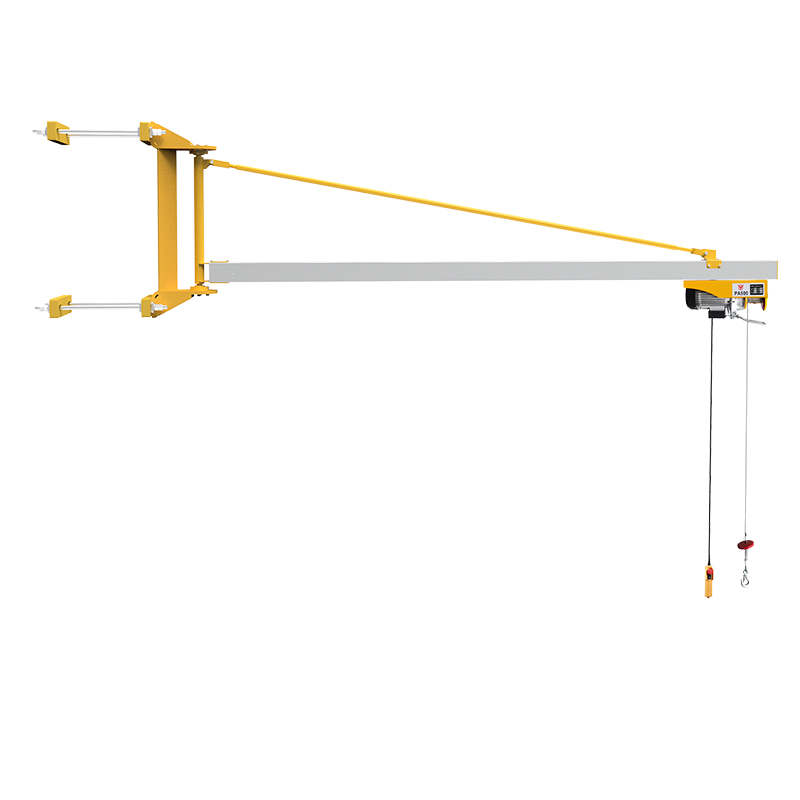
It requires an understanding of your operational requirements, material handling challenges, spatial constraints, and the types of loads being moved. A properly designed jib crane system can dramatically increase productivity, improve safety, reduce injuries, and streamline workflows.
At Aardwolf Industries, we specialize in modular lifting solutions—from vacuum lifters and slab clamps to forklift booms and articulating jibs. Whether you're outfitting a stone fabrication shop or planning a warehouse layout, this guide will walk you through the step-by-step process of designing a jib crane, supported with real-life examples from various industries.
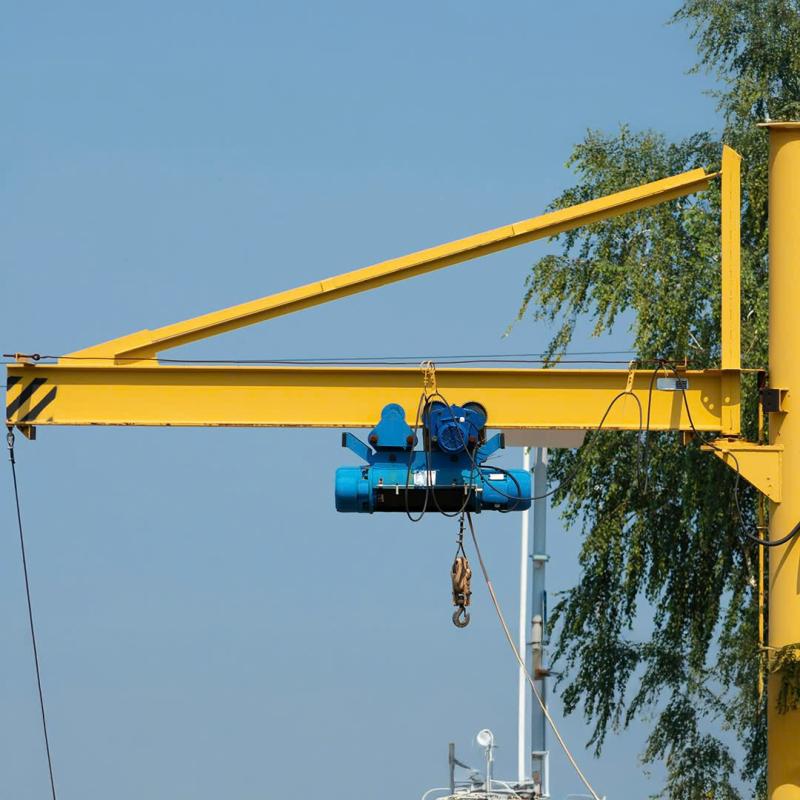
A jib crane is a type of overhead lifting equipment that features a horizontal beam (boom or jib arm) mounted on a vertical support (pillar or mast). The boom supports a trolley and hoist system, which can move back and forth, while the crane itself rotates to cover a circular or semi-circular work area.
Unlike bridge cranes that span large facilities, jib cranes are typically used for localized lifting—such as at workstations, machining centers, or shipping docks. They are highly customizable, making them ideal for repetitive lifting tasks within limited footprints.
Before selecting or designing a jib crane system, it is important to understand the materials being handled, lifting frequency, available workspace, and operational objectives.
For example, lifting a granite slab requires different handling considerations than lifting fabricated steel components. Fragile materials often require vacuum lifting systems and precise positioning, while steel components may use hooks, clamps, or magnetic lifters.
By clearly identifying load characteristics, workspace constraints, and lifting requirements at the planning stage, businesses can select a jib crane configuration that improves safety, productivity, and long-term operational efficiency.
There are five main types of jib cranes. Each suits different structural and operational needs.
Rotation: 360 degrees
Installation: Anchored to reinforced concrete foundation
Use case: Outdoor loading docks, large indoor bays
Example: At a steel service center, a freestanding jib crane is installed on a loading platform to position 5-ton steel coils onto transport trucks.
Specs:
6-meter boom
5-ton capacity
Motorized hoist and trolley
Concrete footing with gusset-reinforced base plate
Rotation: 360 degrees
Installation: Bolted to a 150 mm reinforced concrete slab
Use case: Temporary or light-duty lifting in indoor facilities
Example: A warehouse installs three foundationless jib cranes at picking stations to lift cartons up to 200 kg from pallets onto conveyors.
Specs:
3-meter boom
1,000 lbs capacity
Manual hoist
Easily relocatable during warehouse reconfiguration
Rotation: 360 degrees
Installation: Floor-mounted and supported by an overhead steel structure
Use case: High-capacity lifting where minimal floor space is available
Example: An engine assembly plant installs a mast-type jib to lift engines into vehicles. The boom is mounted below ceiling-mounted HVAC ducts to avoid conflict.
Specs:
5-meter boom
2-ton capacity
Drop cantilever design
Tie-in to structural beam
Rotation: 180 to 200 degrees
Installation: Mounted to walls or columns
Use case: Assembly lines, bays, workstations
Example: A maintenance facility uses wall-mounted jibs to assist mechanics in lifting vehicle transmissions for inspection and repair.
Specs:
3-meter span
1-ton capacity
Tie-rod style for economy
Electrical wiring routed along boom
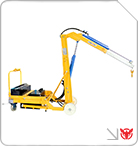
Articulating jib cranes are a type of crane characterized by a jointed arm, or jib, that allows for greater flexibility and maneuverability in lifting and moving loads, particularly in confined or obstructed spaces. This jointed design enables the crane to navigate around obstacles, reach into or under machinery, and service areas that traditional jib cranes might not be able to access.
Rotation: 200 degrees inner arm + 360 degrees outer arm
Installation: Floor, wall, ceiling, or overhead track
Use case: Tight environments requiring flexible, multi-point access
Example: A glass manufacturer uses ceiling-mounted articulating jibs to lift window panels from racks into packaging stations, navigating around posts and ductwork.
Specs:
Dual-arm design: 2 meters + 2 meters
500 kg capacity
Cleanroom-rated pneumatic hoist
This is the length of the horizontal arm. Longer spans allow greater coverage but may require higher structural capacity and torque resistance.
Typical Range: 2 to 10 meters
Example: A 5-meter span covers a workspace that includes a materials table, welding bench, and storage rack.
This is the clear distance from the floor to the underside of the boom. It determines the maximum lift height and must account for the hoist body and load size.
Example: Lifting a 1.2-meter-tall crate requires at least 2.5 meters of clearance to allow for hook travel and placement on a pallet.
Overall mast or column height including base plates, electrical components, and rotation stops.
Hoist Types:
Manual chain hoists: For low-frequency, low-cost solutions
Electric chain hoists: Standard for industrial settings
Wire rope hoists: For high-capacity or faster lifting speeds
Pneumatic hoists: Ideal for cleanrooms or explosive environments
Trolley Types:
Push trolley: Manually moved by operator
Motorized trolley: Electric drive for precise load positioning
Air trolley: Used with pneumatic hoists
Control Options:
Pendant with push buttons (wired)
Remote control (wireless)
Variable-speed controls for delicate materials
Example: A glass installer uses a remote control to lift and rotate 2.4 x 1.8 meter panels using an Aardwolf AVLHP240 vacuum lifter, improving visibility and safety.
Freestanding base-plate: Requires up to 1-meter deep reinforced foundation
Foundationless: Six-inch slab with correct rebar grid
Wall or column mount: Structure must withstand bending and torsional loads
Tip: Conduct a structural analysis before installing wall- or ceiling-mounted cranes. Many failures happen due to underestimating structural loads.
Outdoor installations: Use galvanized steel and sealed electrics (IP65 rated)
Corrosive environments: Stainless steel or epoxy-coated components
Dusty/hot areas: NEMA-rated enclosures and fans
This section provides real-world applications showing how Aardwolf’s lifting equipment integrates with various jib crane systems to solve specific material handling challenges across multiple industries.
For customers across Southeast Asia, Aardwolf lifting equipment—including vacuum lifters, slab lifters, forklift attachments, and material handling solutions—is available through Toolrange Asia.
Learn more about Aardwolf equipment available through Toolrange Asia:
Designing a jib crane is a multi-variable engineering process. You should consider your:
Load capacity and duty cycle
Boom length and lifting height
Space and structure constraints
Environmental conditions
Attachments for material type
By carefully selecting the appropriate type of jib crane and tailoring its design to your specific operational needs—whether it's choosing the right span, mounting system, lifting attachment, or hoist configuration—you create a material handling system that not only maximizes productivity but also safeguards your materials and significantly improves workplace safety.
In industries like stone fabrication, glass handling, automotive assembly, or warehousing, these thoughtful design decisions translate into:
Faster cycle times with less manual strain on operators
Fewer product damages due to smoother, more controlled lifting
Reduced risk of injury by minimizing awkward or repetitive movements
Long-term ROI through reliable performance and lower maintenance costs
At Aardwolf Industries, we specialize in helping customers achieve exactly that. Whether you're lifting 50 kg panels or 5-ton stone blocks, we can engineer a jib crane solution that works as hard—and as smart—as you do.
Explore our full line of jib cranes, forklift booms, and vacuum lifters at aardwolf.com.vn, or reach out to our sales team for expert consultation and custom solutions.
1. How to operate a Jib Crane safely
3. Over brace jib crane wall mounted
5. Is a Jib Crane a Gantry Crane
6. Articulated Jib Crane Wall Mounted
8. Manual Counterbalance Crane
10. Over Braced Jib Crane Column Mounted
注册以接收 Aardwolf 新产品、特别优惠和更多信息。
注册即表示您同意接收来自 Aardwolf 的新闻、特别优惠、促销和其他信息。您可以随时取消订阅。