










 뉴스
Which Material Handling Equipment Is Best for Heavy or Oversized Loads?
뉴스
Which Material Handling Equipment Is Best for Heavy or Oversized Loads?
언어 변경



우리를 팔로우하세요


 Share
Share
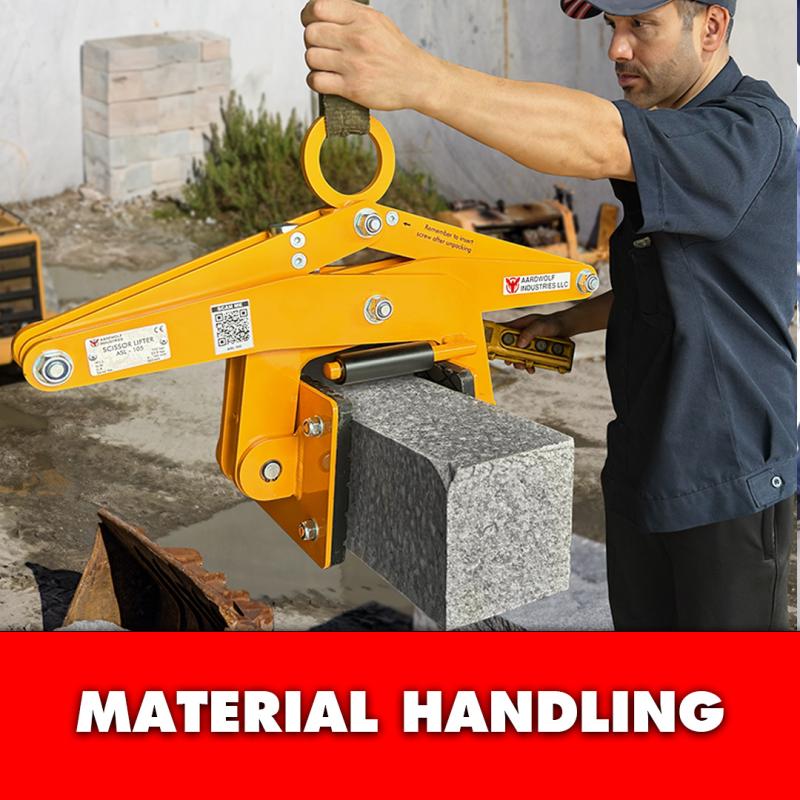
Handling heavy or oversized loads demands the right blend of strength, precision, and safety. This article dives into the criteria for choosing the best material-handling equipment, surveys top solutions like the gantry crane, jib crane, vacuum lifter, slab lifter, and scissor lifter, and offers guidance on securing loads with ratchet tie down traps.
When facilities tackle loads that exceed standard weight or dimensions, they encounter unique hurdles that require specialized lifting equipment.
Extreme Weights: Loads often exceed several tons, far beyond manual handling limits.
Bulky Dimensions: Oversized items like precast concrete panels or industrial machinery demand wide spans and tall lifts.
Unbalanced Shapes: Irregular center-of-gravity distributions increase tipping risks and require multi-point support.
Space Limitations: Narrow aisles or low ceilings constrain overhead systems.
Floor Load Capacity: Heavy loads concentrate pressure, necessitating reinforced flooring or mobile solutions.
Operational Tempo: High-throughput environments need rapid, reliable lifting cycles to maintain productivity.
Choosing the right system hinges on evaluating facility needs, load characteristics, and safety requirements.
Rated Capacity: Ensure equipment’s maximum load rating comfortably exceeds the heaviest expected weight—allowing a 25–50% safety margin.
Safety Features: Emergency stops, overload sensors, and redundant braking systems protect machinery and personnel.
Operational Span: Determine the horizontal and vertical reach required—whether it’s end-to-end coverage of a bay or a localized work cell.
Mobility Needs: Fixed cranes like the gantry crane offer broad span coverage, while portable units add flexibility.
Positioning Accuracy: For applications like mold placement or panel alignment, precise load movement is critical.
Speed vs. Control: Variable speed drives and soft-start/stop functionality balance swift operation with gentle handling.
Workflow Compatibility: Ensure the new equipment meshes with conveyors, AGVs, or manual handling zones.
Power & Control Integration: Tie into plant automation and safety interlocks to streamline operations.
Below is an in-depth look at the most effective lifting systems for heavyweight challenges.
A gantry crane features a bridge supported by freestanding legs that run on rails—ideal for covering large areas without ceiling support.
High Capacity & Span: Capable of lifting multiple tons over wide bays.
Outdoor & Indoor Use: Versatile in shipyards, warehouses, and construction sites.
Enhanced Control: Modern units include digital positioning and remote operation.
Learn more about overhead vs. gantry functionality in this gantry crane guide.
Jib cranes mount to walls, columns, or floors and rotate to serve localized zones.
Precision Access: 180–360° rotation for targeted lifts.
Compact Footprint: Requires minimal floor or ceiling space.
Ease of Installation: Wall‑ or column‑mount options simplify setup.
Explore configurations in our jib crane overview.
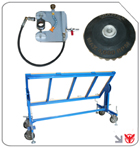
For non‑porous, delicate surfaces like glass panels and metal sheets, vacuum lifters provide non‑contact grip.
Scratch-Free Handling: Suction cups adhere without marring surfaces.
High Capacity Units: The vacuum lifter handles up to 1,000 kg with rotation and tilt.
Rapid Cycle Times: Quick attach/detach improves throughput.
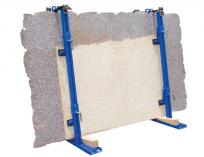
Specialized for flat, solid materials—stone, concrete, or large wood panels—slab lifters distribute weight evenly.
Multi-Point Clamping: Reduces tipping by evenly spreading load across several pads.
Automated Locking: Secures the slab during transit and rotation.
Integration: Works with overhead cranes or forklifts; see our slab lifter for details.
Scissor lifters use a cross‑brace design for stable, vertical movement, ideal for fine height adjustments.
Ergonomic Positioning: Adjusts platform height to operator level, reducing strain.
High Stability: Wide base and rigid mechanism support heavy payloads.
Versatile Use: Perfect for production lines, loading docks, and maintenance bays; check this scissor lifter.
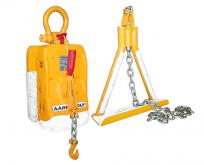
Mechanical lifting clamps grip structural steel, beams, and other irregular loads.
No Power Required: Purely mechanical operation—ideal for austere environments.
Adjustable Jaws: Handle varying material thicknesses.
Durability: Built to withstand heavy industry conditions.
Securing loads during transport—whether on forklifts, trailers, or cranes—is vital. Quality ratchet tie down straps:
High‑Tensile Webbing: Resists stretching under load.
Corrosion‑Resistant Hardware: Durable buckles and hooks for safe restraining.
Easy Operation: Ergonomic ratchet handles and integrated tension indicators.
A precast concrete yard uses gantry cranes to move 10‑ton wall panels from curing racks to transport trailers. Slab lifters on each panel ensure stable handling, while ratchet straps secure loads in transit.
An engine assembly plant deploys jib cranes at each station to lift 2‑ton blocks precisely onto fixtures. Scissor lifters adjust tooling heights; vacuum lifters handle delicate cover plates without marring.
Plate clamps and overhead gantry cranes collaborate to lift 5‑m-long steel plates. Clamps grip plates at their neutral axis, and cranes move them to CNC cutting tables with minimal operator intervention.
Even the best equipment fails without proper practices.
Daily Checks: Visual inspection of hooks, cables, and controls.
Monthly Servicing: Lubrication, load‑testing, and sensor calibration.
Annual Overhauls: Non‑destructive testing on critical welds and frames.
Hands‑On Training: Practical sessions for each device type.
Safety Protocols: Lockout/tagout, emergency stops, and load rating awareness.
Refresher Courses: Keep skills current with evolving standards.
Pre‑Lift Checklists: Verify load weight, balance, and securement method.
Strapping Standards: Use rated ratchet tie down straps per industry guidelines.
Dynamic Load Monitoring: Employ load cells or sensors to prevent overload.
Selecting and integrating heavy‑load equipment often requires expertise beyond in‑house capabilities.
Experience: Proven track record in the material handling industry.
Customization: Ability to tailor solutions—whether for gantry crane spans or vacuum lifter configurations.
Support Services: Training, maintenance contracts, and rapid spare‑parts delivery.
Consultation & Design: Workflow analysis, layout optimization, and equipment selection.
Installation & Commissioning: Precise alignment of cranes, lifters, and control systems.
Ongoing Support: Preventive maintenance programs and 24/7 technical assistance.
Robotic Gantries: Automated pick‑and‑place across bays.
Digital Twins: Simulate load flows and optimize crane paths virtually.
Predictive Maintenance: IoT sensors forecast component wear, minimizing downtime.
Electric Drives: Reduce carbon footprint compared to hydraulic systems.
Recyclable Components: Sustainable materials in pads, webbing, and structural parts.
Managing heavy and oversized loads in the material handling sector demands deliberate equipment selection and meticulous operational practices. Whether you choose a robust gantry crane, a flexible jib crane, or specialized devices like the vacuum lifter, slab lifter, and scissor lifter, the right combination ensures safety, efficiency, and return on investment. Complement these systems with lifting clamps and reliable ratchet tie down straps for secure transport, and partner with reputable material handling companies to leverage expertise across design, installation, and maintenance.
By adhering to best practices—regular maintenance, operator training, and load securement protocols—you’ll position your operation at the forefront of the material handling industry, ready to tackle even the heaviest challenges with confidence.
Aardwolf의 신제품, 특별 할인 및 기타 정보를 받으려면 가입하세요.
가입하면 Aardwolf로부터 뉴스, 특별 할인, 프로모션 및 기타 정보를 이메일로 받는 데 동의하게 됩니다. 언제든지 구독을 취소할 수 있습니다.