









 뉴스
How to Optimize Your Warehouse Layout for Material Handling
뉴스
How to Optimize Your Warehouse Layout for Material Handling
언어 변경



우리를 팔로우하세요


 Share
Share
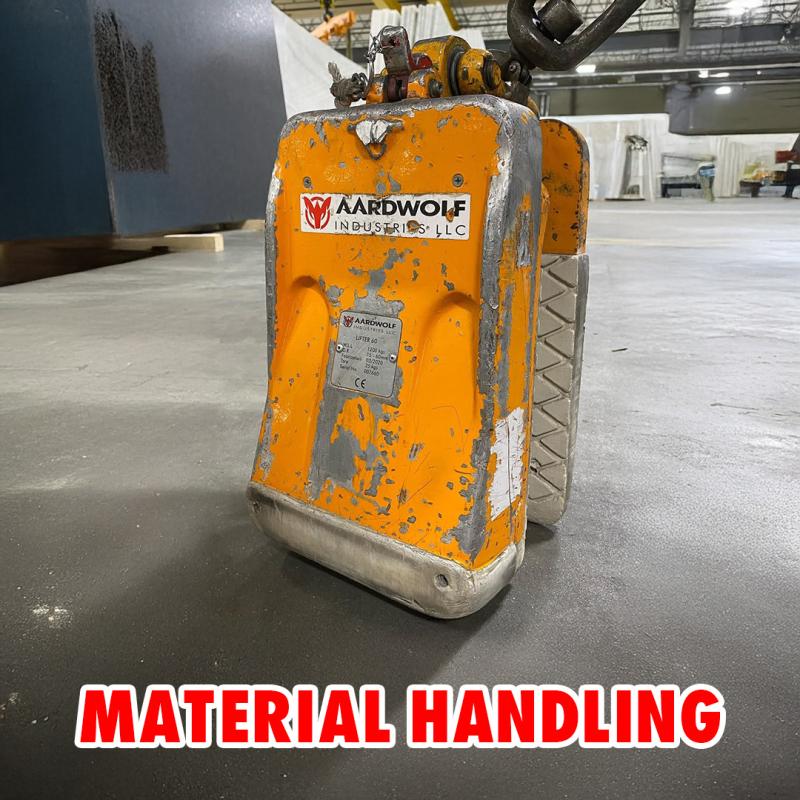
In this guide, we’ll walk through every step to optimize your warehouse layout—leveraging tools like lifting clamps, vacuum lifters, slab lifters, and scissor lifters—and explore how accessories such as ratchet tie down straps and overhead systems like the gantry crane and jib crane can transform your operation.
Before you redesign anything, you need a clear picture of your existing processes. A thorough assessment will reveal inefficiencies and guide your optimization efforts.
Document Every Movement: Track how pallets, cartons, and raw materials move from receiving docks to storage racks, order‑picking areas, and shipping bays.
Use Flow Charts: Create visual maps showing each step, identifying high‑traffic corridors and frequently serviced zones.
Quantify Distances: Measure average travel distances and times between key points—this data highlights where layout changes can yield the biggest time savings.
Bottlenecks occur where traffic converges—like narrow aisles or overloaded workstations.
Dead Zones are underutilized areas that waste valuable square footage.
Conduct time‑motion studies or use warehouse management system (WMS) reports to pinpoint these problem spots.
A well‑optimized layout balances storage capacity, accessibility, and process flow. Let’s explore the foundational design principles.
Receiving Zone: Near dock doors for quick unloading.
Bulk Storage: Allocated for slow‑moving SKUs, using high‑density racking.
Order Picking: Central, with wide aisles for cart or pallet jack access.
Packing & Staging: Adjacent to picking area to reduce travel.
Shipping Zone: Close to outbound docks to streamline dispatch.
Narrow Aisles boost storage density but require specialized forklifts or automated vehicles.
Wide Aisles facilitate faster movement of pallet jacks and walk‑behind trucks.
Racking Types: Choose selective, drive‑in, or push‑back racking based on turnover rates and SKU variety.
Once your layout zones are defined, integrate specialized equipment to handle material more efficiently and safely.
For large, heavy, or fragile products, manual handling is both risky and slow. Equipment such as the vacuum lifter and slab lifter can:
Vacuum Lifter: Create suction‑based grips on smooth surfaces (glass panels, sheet metal) to prevent scratches and reduce operator strain.
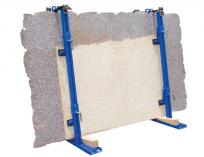
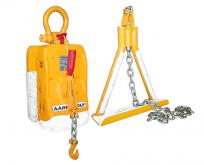
Slab Lifter: Use multi‑point clamps and rollers to evenly distribute weight across large, flat materials like stone slabs or precast concrete, ensuring stability and safety during transport.
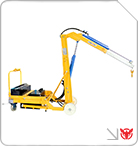
Scissor Lifter: Offers vertical adjustment to match conveyor heights or assembly stations. An example is the scissor lifter, which precisely elevates loads to ergonomic working heights.
Lifting Clamp: Mechanical clamps can grip irregular shapes—steel beams, timber planks—providing a reliable, powered‑free solution for heavy loads.
Overhead lifting expands your usable floor space by handling loads above ground:
Gantry Crane: A mobile or fixed bridge crane running on rails, capable of spanning wide warehouse bays. Ideal for lifting and transporting heavy pallets or machinery across long distances. Learn more about the differences in an overhead vs. gantry crane.
Jib Crane: Mounted to columns or walls, a jib crane provides 180–360° coverage in a local work cell, perfect for loading or unloading machines and workstations.
Optimizing layout isn’t just about speed—it’s also about safe, reliable operations. Proper load securing and safety measures are non‑negotiable.
When transporting materials on forklifts, trailers, or automated tuggers, loose loads pose a serious hazard. Using quality ratchet tie down straps:
Prevents Shift: Tightens securely around pallets or uneven cargo.
Reduces Damage: Stabilizes goods, minimizing tipping or sliding during transit.
Enhances Compliance: Meets regulatory requirements for load restraint in warehouses and shipping.
Designated Walkways: Clearly marked pedestrian paths, separated from equipment lanes.
Warning Signs: Alert staff to overhead crane operation, forklift crossings, and heavy‑load zones.
Buffer Areas: Keep high‑traffic corridors free from storage or staging, reducing collision risks.
Warehouse layouts must support continuous improvement and growth. Incorporate lean principles and flexible design.
Sort: Remove unnecessary items from work areas.
Set in Order: Arrange tools and materials to support smooth flow.
Shine: Maintain cleanliness—critical for equipment like vacuum lifters and scissor lifters.
Standardize: Create consistent procedures for loading, unloading, and transport.
Sustain: Develop a culture of continuous adherence to best practices.
Modular Racking: Choose systems that can be reconfigured as SKU profiles change.
Multi‑Purpose Zones: Design areas that can switch between picking, kitting, or value‑added tasks.
Scalable Automation: Implement AGV and conveyor platforms that can be expanded incrementally.
No warehouse operates in isolation. Partnering with experienced material handling companies ensures you get expert guidance and support.
Industry Experience: Look for companies with proven track records in the material handling industry.
Customization Capabilities: Your layout and process needs are unique—ensure vendors can tailor solutions accordingly.
Service & Support: Ongoing maintenance, training, and spare‑parts availability are critical for minimal downtime.
Standards & Certifications: Verify that all equipment meets OSHA, ISO, and local safety codes.
Documentation: Maintain records for load tests, inspections, and operator certifications to support audits and liability protection.
Optimizing your warehouse layout for material handling is a strategic endeavor that blends process analysis, smart design, and targeted equipment selection. By mapping workflows, establishing clear zones, and integrating advanced tools—such as slab lifters, vacuum lifters, scissor lifters, and overhead systems like the gantry crane and jib crane—you can achieve faster throughput, improved safety, and lower costs.
Don’t overlook the role of accessories like ratchet tie down straps to secure loads and prevent accidents. Embrace lean methodologies and scalable designs to adapt to changing demands, and partner with reputable material handling companies to ensure expert implementation and ongoing support.
With a well‑optimized layout and the right material-handling equipment, your warehouse will be positioned to handle material more efficiently, safely, and profitably—today and well into the future.
Aardwolf의 신제품, 특별 할인 및 기타 정보를 받으려면 가입하세요.
가입하면 Aardwolf로부터 뉴스, 특별 할인, 프로모션 및 기타 정보를 이메일로 받는 데 동의하게 됩니다. 언제든지 구독을 취소할 수 있습니다.