











 便り
What Are the Top Material Handling Equipment Trends for 2025?
便り
What Are the Top Material Handling Equipment Trends for 2025?
言語を変更する



フォローする


 Share
Share
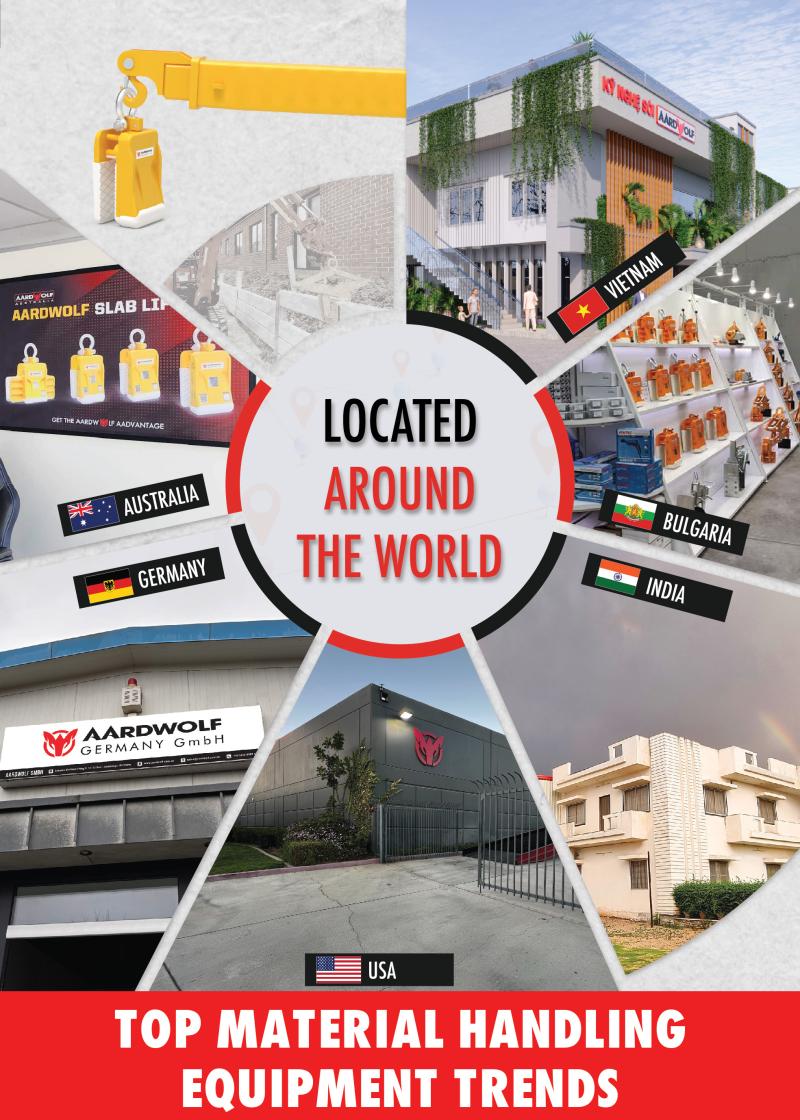
At its core, material handling is much more than simply handling inventory—it encompasses the movement, protection, storage, and control of materials and products throughout their entire lifecycle: from manufacturing and warehousing through distribution, consumption. Material handling equipment covers a range of machines and systems used to move, store, and manage materials and products throughout production processes, including everything from simple manual devices to fully automated system.
Efficient material handling is critical to keeping supply chains responsive and cost-effective. As handling material becomes more complex—driven by increasing order volumes, tighter delivery windows, and e-commerce growth—material handling companies are investing in smarter, more flexible solutions. The result is a material handling industry that continuously innovates to improve throughput, safety, and sustainability.
Automation continues to transform how businesses approach material handling. From AI-driven conveyors to robot-assisted order picking, smart systems are reducing manual labor while boosting accuracy and speed. In 2025, expect deeper integration between warehouse management software (WMS) and automated guided vehicles (AGVs), enabling real-time load redistribution and adaptive routing to meet fluctuating demands. This shift not only streamlines workflows but also enhances safety by minimizing human interaction with heavy loads.
The demand for nimble lifting equipment is on the rise, especially in facilities requiring rapid reconfiguration. Modular cranes and jibs that can be relocated without extensive downtime are key. One standout is the portable gantry crane equipment, which offers quick assembly, transportability, and load capacities suitable for a variety of applications. Such gantry crane systems enable smaller operations to access versatile lifting capabilities traditionally reserved for larger, installed cranes.
Secure load handling remains paramount—especially for irregularly shaped or fragile items. Ratchet straps have evolved into precision tools with ergonomic handles and higher load ratings. The latest trend features heavy duty ratchet straps equipment designed to reduce tie-down time and increase holding strength. As ratchet tie down traps become standard on forklifts and cranes, operators gain confidence that even the most cumbersome loads remain stable during transit.
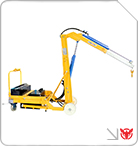
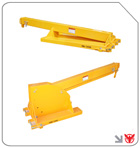
Industrial jib cranes are gaining traction in process-driven environments such as assembly lines and machining cells. These cranes offer localized lifting support, reducing the need for large overhead systems. The trend toward compact, floor-mounted jibs is exemplified by industrial mounted jib crane equipment, which combines a small footprint with high outreach and payload flexibility. Manufacturers value this lifting equipment for its ability to serve multiple workstations with minimal structural modifications.
Efficiency often hinges on selecting the right combination of tools. Companies are increasingly adopting turnkey solutions that bundle conveyors, lifts, and sortation modules into cohesive lines. Resources like the link on efficient material-handling equipments illustrate real-world implementations where integrated systems have reduced pick-to-ship times by up to 30%. Such case studies drive adoption among material handling companies seeking proven ROI.
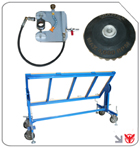
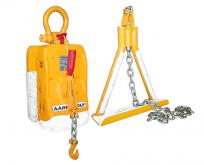
Custom lifting tools are essential when dealing with delicate or irregular surfaces. The scissor clamp lifter ASL105 exemplifies a scissor lifter that grips slabs securely without marring finishes. As lifting clamp technology advances, operators can handle a wider variety of materials—from stone countertops to composite panels—without relying on vacuum solutions alone.
Relative keywords: scissor lifter, lifting clamp.
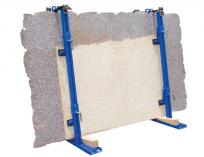
Slab yards and stone fabrication shops are embracing automation to speed up throughput. The slab lifting automatic with roller AL50AR integrates rollers for easy positioning, reducing manual adjustments and cycle times. By combining slab lifter mechanisms with automatic roller beds, operations achieve safer handling and faster changeovers—critical in high-volume production environments.
Vacuum lifters remain indispensable for handling smooth, non-porous surfaces like glass and metal panels. The vacuum glass lifter AVLP4 offers increased suction capacity and battery life, enabling single-operator handling of large sheets. These vacuum lifter slab lifter hybrids deliver both mobility and stability, making them a top choice for window fabrication and precision assembly.
Green initiatives are reshaping equipment design, with energy-recovery jibs and regenerative braking on cranes. Solar-assist charging stations for electric tuggers and forklifts reduce carbon footprints in warehousing operations. As buyers at material handling companies demand eco-friendly solutions, manufacturers are innovating to align lifting equipment performance with sustainability goals.
The material handling industry in 2025 is characterized by agile, technology-driven solutions that prioritize efficiency, safety, and sustainability. From modular portable gantry crane equipment to advanced vacuum lifters like the AVLP4, the trends highlighted here demonstrate how material handling equipment continues to evolve. As material handling companies and operations managers plan for the future, investing in these key equipment trends will be essential for staying competitive in a fast-moving market.
Aardwolfの新製品、特別オファーなどの最新情報を受け取るにはご登録ください。
登録すると、Aardwolfからニュース、特別オファー、プロモーション、その他の情報を含むメールを受け取ることに同意したことになります。いつでも配信停止できます。