












 便り
How to Optimize Your Material Movement
便り
How to Optimize Your Material Movement
言語を変更する



フォローする


 Share
Share
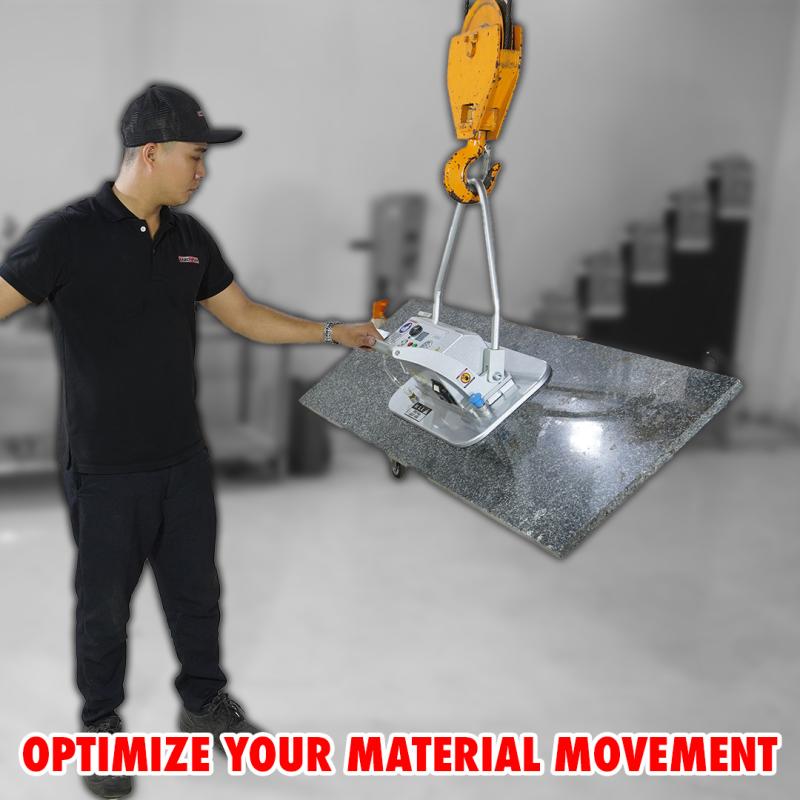
From unloading inbound shipments to loading outbound trailers, every touchpoint impacts productivity, safety, and cost. In today’s competitive material handling industry, optimizing your processes means selecting the right equipment—whether it’s a lifting clamp, vacuum lifter slab lifter, or scissor lifter—and integrating best practices across planning, layout, and continuous improvement. This guide will walk you through strategic steps, technology insights, and proven principles to elevate your material-handling equipment game.
Material handling refers to the movement, protection, storage, and control of materials throughout manufacturing, warehousing, distribution, consumption, and disposal. It encompasses a broad spectrum of handling material methods, from manual carts to fully automated conveyors. By understanding the end-to-end flow—receiving, storing, picking, and shipping—you can identify bottlenecks and implement targeted solutions.
Whether you partner with specialist integrators or OEMs, material handling companies provide the expertise to design systems that meet your throughput and safety requirements. They guide you through equipment selection, facility layout, and software integration—ensuring your investment in lifting equipment and control systems delivers maximum ROI.
A thorough process analysis lays the foundation for optimization. Map every step—from dock to production line—and document material travel distances, handling points, and storage locations. For deeper insight, explore material handling processes.
Use value-stream mapping or digital twin simulations to visualize your flow. Pinpoint redundant transfers, excessive travel routes, and storage inefficiencies. Armed with this data, you can reconfigure lanes, adjust rack positions, and reduce manual handling—leading to faster cycle times and fewer errors.
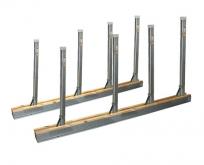
Optimal unit loads simplify handling and protect your goods. Standardize pallet sizes and containers to work seamlessly with pallet jacks, forklifts, and attachments like the how to transport frames. Consistent load profiles minimize changeovers and speed up staging.
For irregular or heavy items, turn to tailored solutions:
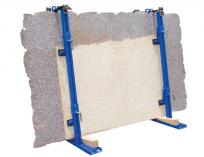
Selecting the ideal slab lifter ensures safe handling of stone and tile slabs, reducing chip and breakage rates.
Choosing the right scissor lifter streamlines vertical adjustments and improves operator ergonomics.
These attachments extend your forklift’s versatility and safeguard both product and personnel.
Automated Storage and Retrieval Systems (AS/RS) transform narrow aisles and high-bay storage. From shuttles and cranes to carousels and vertical lift modules, AS/RS maximizes density and throughput while minimizing travel time. Integrate robotic arms or conveyors for hands-free pick-and-place cycles that boost accuracy and uptime.
Connecting your AS/RS hardware to a Warehouse Management System (WMS) or Transportation Management System (TMS) delivers real-time visibility. Automated slotting algorithms direct each pick to the most efficient storage location. Drivers benefit from optimized load building and route guidance—unifying material handling and distribution under one digital roof.
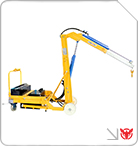
Scissor lifters and clamp attachments excel at handling odd-shaped loads. For example, the choosing the right scissor lifter lets operators quickly adjust height and clamp pressure, minimizing manual labor. When you need precision grips on beams or pipes, a well-matched lifting clamp prevents slipping and damage.
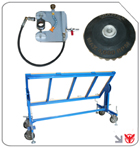
When lifting smooth, non-porous surfaces—like stone or glass—a vacuum lifter slab lifter offers unparalleled safety. As the cornerstone of effective material handling, vacuum technology eliminates pinch points and distributes loads evenly. Operators can handle large panels single-handedly, reducing the risk of back injuries.
Efficient layouts balance throughput with accessibility. Group high-velocity SKUs near shipping docks, implement U-shaped picking zones, and maintain clear cross aisles. Narrow-aisle forklifts and aisle-guidance systems boost density without compromising safety.
Don’t neglect the vertical dimension. Install mezzanines, high-rise pallet racks, or gantry crane material handling solutions to reclaim floor space. Learn how gantry cranes work to streamline material flows and integrate them with your AS/RS for seamless vertical transfers.
Any overhead or gantry system requires rigorous safety protocols:
Conduct daily inspections of hooks, cables, and hoists.
Train operators on How to operate a jib crane safely with step-by-step procedures.
Implement lockout/tagout and emergency-stop measures.
Minimize strain by incorporating adjustable workstations, lift-assist arms, and anti-fatigue mats. Teach proper lifting techniques and the use of ratchet strap of your cargo to secure loads quickly. Regular safety huddles reinforce correct postures and reporting of near-misses.
Key Performance Indicators (KPIs) such as picks per hour, order accuracy, and equipment uptime spotlight improvement areas. Use dashboards to display metrics in real-time, enabling quick corrective actions and recognition of high performers.
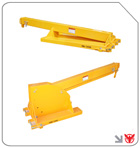
Implement Kaizen events and 5S audits to eliminate waste. Tackle one process at a time—whether it’s material handling processes or forklift boom operations how to handle the forklift boom—and standardize the gains before moving on to the next.
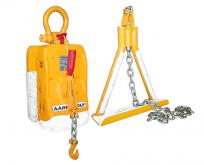
Heavy stone slabs and concrete blocks demand specialized gear. Explore the transportation of stone slabs for eco-friendly practices, or the efficient handling of concrete blocks and natural stone to avoid damage. For high-volume block yards, block lifts offer rapid cycle times and secure grips.
Handling fragile glass panels is simplified with the The Aardwolf Glass Lifter AL30AWJH, which employs vacuum cups to cradle sheets without marks or slippage. This solution speeds installs and reduces breakage claims.
Continue honing your expertise with these valuable resources:
For deeper dives on complementary topics—such as What Materials Drove the Evolution of Kerb Stones? or Assess Your Operational Needs for Material Handling Trolleys—follow the reference links above.
Optimizing your material handling strategy demands a holistic approach: meticulous planning, the right material handling equipment, smart facility layouts, and an unwavering commitment to safety and continuous improvement. By leveraging advanced technologies—from gantry crane material handling to vacuum lifter slab lifter systems—and embedding Lean principles into your culture, you’ll reduce costs, boost throughput, and elevate service levels. Start today by assessing your current state against the best practices outlined here, and watch your material movement transform into a competitive advantage.
Aardwolfの新製品、特別オファーなどの最新情報を受け取るにはご登録ください。
登録すると、Aardwolfからニュース、特別オファー、プロモーション、その他の情報を含むメールを受け取ることに同意したことになります。いつでも配信停止できます。